Cart
0
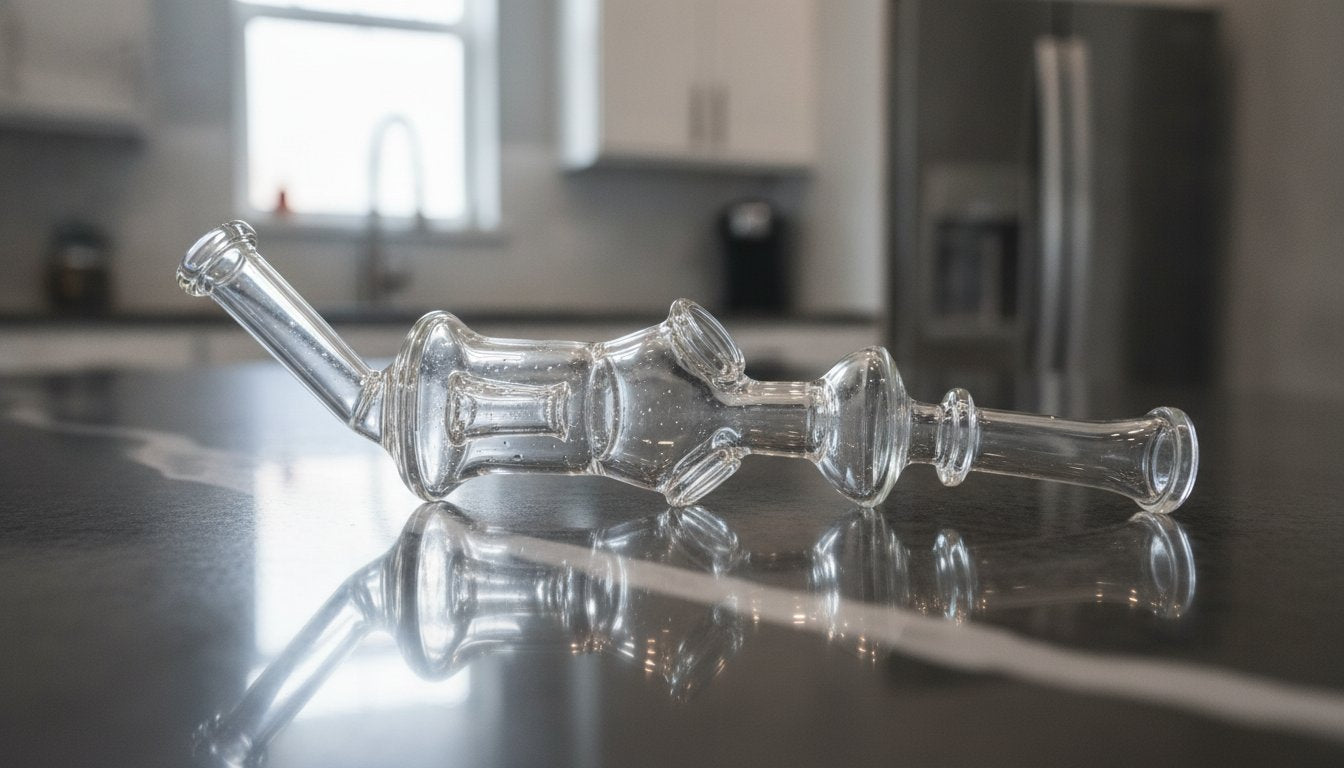
A dirty downstem isn't just an eyesore; it's a direct assault on your flavor and your lungs. You know the feeling of a harsh, burnt-tasting hit that ruins a premium session. It's frustrating when your downstem is stuck to the joint or clogged with resin that no brush can reach. Learning how to clean glass downstem components shouldn't feel like a chore or a science experiment. You deserve a better experience every time you use your piece. Stop settling for restricted airflow and cloudy glass.
We agree that your gear should work as hard as you do. This guide is your roadmap to mastering the art of downstem restoration. We promise high-impact techniques that deliver instant clarity and pure, untainted flavor. You'll learn how to use professional-grade solutions like Bongo Glass Cleaner to dissolve resin on contact without the abrasive damage of salt. We are covering everything from breaking through stubborn clogs to establishing an effortless maintenance routine that keeps your glass crystal clear and your airflow completely restored. It's time to bring your glass back to life with speed and precision.
Key Takeaways
- Understand why the downstem is the critical gateway for filtration and how resin buildup destroys your favorite flavor profiles.
- Discover exactly how to clean glass downstem parts using a professional 3-step restoration ritual that delivers instant results without abrasive salt.
- Master safe, high-impact techniques for loosening "frozen joints" and removing stuck downstems without risking expensive glass breakage.
- Implement a 30-second daily maintenance routine to prevent permanent staining and ensure your piece always delivers peak performance.
- Learn why proprietary formulas like Bongo Glass Cleaner outperform traditional DIY hacks by dissolving stubborn resin on contact.
Why Your Glass Downstem is the Heart of Every Hit
Your downstem is the engine room of your entire setup. It acts as the critical gateway between raw combustion and smooth filtration. If this single component is compromised, your whole experience falls apart. You invested in quality glass for a reason. Don't let a thin layer of resin turn a premium piece into a restricted, harsh-tasting burden. When you understand how to clean glass downstem parts effectively, you reclaim the performance you paid for. It's about more than aesthetics; it's about pure, unhindered airflow.
There is a hidden danger lurking in that dark, sticky residue. Stagnant resin is a magnet for bacteria and mold. These biofilms thrive in damp, narrow environments where airflow is frequent but cleaning is neglected. Inhaling through a neglected downstem means you are pulling smoke through a layer of organic buildup. This isn't just gross; it's a direct threat to your respiratory health. Keeping your glass pristine ensures that every hit is as clean as the day you bought the piece. Clean glass is the only way to guarantee a smooth, professional-grade experience.
The Science of Narrow-Aperture Buildup
Tar and resin settle faster in the downstem than anywhere else in your piece. This happens because the downstem is the primary heat-exchange component for filtration. As hot smoke enters the narrow tube and hits the water-cooled glass, it undergoes a rapid temperature drop. This thermal shock causes heavy particles to solidify and stick to the walls instantly. This creates a "venturi effect" where the restricted space increases smoke velocity while simultaneously trapping more debris. This residue disrupts the cooling process, forcing you to deal with chaotic, hot air instead of organized, cooling bubbles.
Performance Impact: Dirty vs. Crystal Clear
The difference in performance is night and day. A clogged downstem creates massive draw resistance, making every pull feel like a chore. You shouldn't have to strain to get a decent hit. When your glass is crystal clear, the airflow is effortless and the filtration is maximized. Consider these key performance benefits:
- Flavor Precision: You taste the actual terpene profile of your herb, not the carbonized remains of previous sessions.
- Maximum Diffusion: Clean slits or holes in a diffuser downstem create smaller bubbles, which increases surface area for better cooling.
- Visual Authority: A pristine setup looks sharp and professional, showing that you value your gear and your health.
Mastering how to clean glass downstem components is the fastest way to restore your piece to its peak condition. You don't need to settle for restricted hits or a "dirty" taste. With the right approach, you can achieve total clarity in seconds.
The Ultimate 3-Step Downstem Restoration Ritual
Forget the 30-minute soak. Efficiency is the new standard for 2026. You want results now. This ritual is designed for speed and safety. Learning how to clean glass downstem parts doesn't require a chemistry degree or an entire afternoon. It requires the right formula and a steady hand. Stop wasting time with ineffective methods that leave your glass cloudy. Follow this professional restoration ritual for instant clarity and a piece that looks brand new.
Step 1: Safe Extraction and Preparation
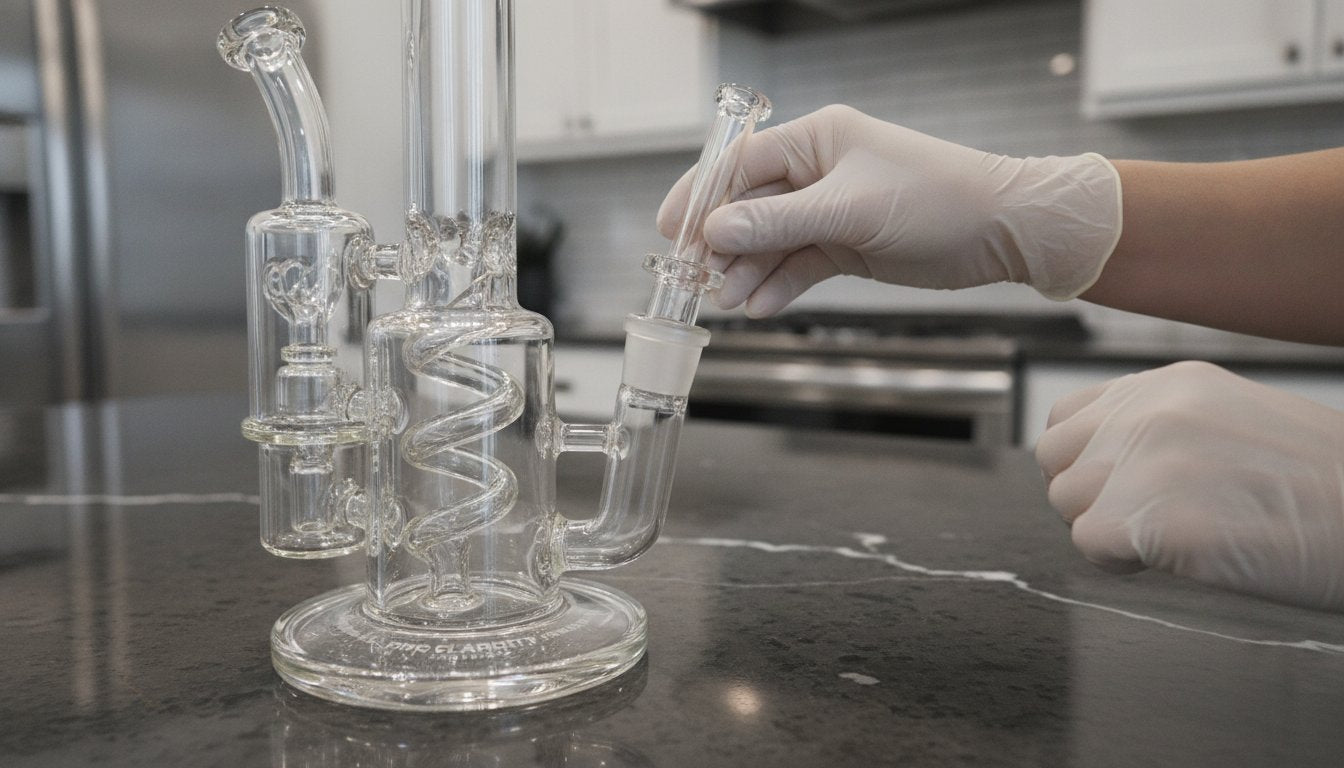
Start with safety. Remove the bowl first and set it aside. Grip the downstem firmly by the joint. Use a steady, vertical pull. Avoid side-to-side twisting. This prevents joint stress and potential snaps. Inspect the glass for micro-cracks or "chillers." If the glass is compromised, be extra gentle. Place the stem in a secure cleaning tube or a heavy-duty bag to contain the solution. This preparation ensures you don't make a mess or damage your expensive borosilicate during the process.
Step 2: The Bongo Glass Cleaner Application
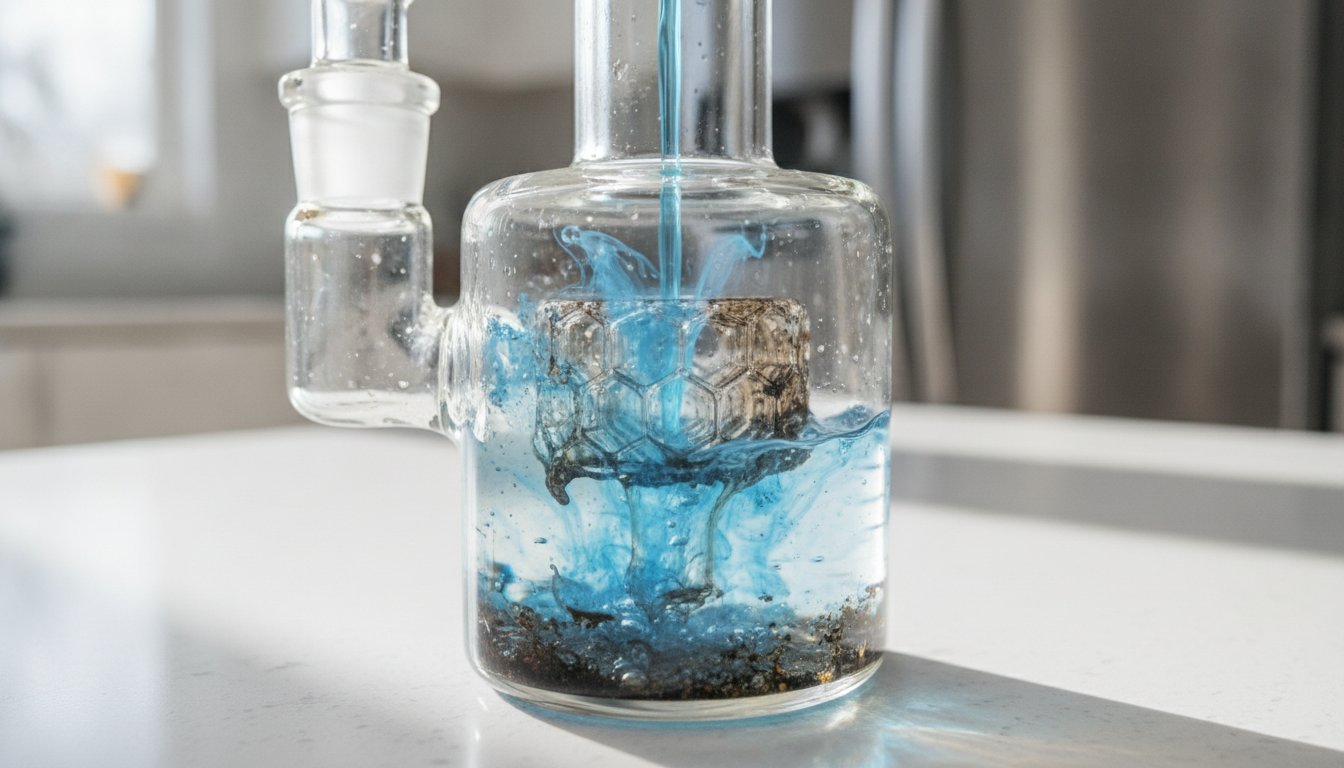
Pour enough Bongo Glass Cleaner to submerge the resin line. Watch the chemical reaction. The tar dissolves instantly. You won't need to shake it for twenty minutes. Most guides suggest an overnight soak with alcohol. That's a waste of time. Our formula works on contact. Avoid the "salt scratch" at all costs. Traditional DIY hacks use salt as an abrasive. It works, but it leaves permanent micro-scratches on your glass. Those scratches become new homes for resin buildup. Use a liquid-only formula to protect your investment. Choosing a Bong Cleaner designed specifically for glass is the only way to ensure a long lifespan for your piece.
Step 3: High-Pressure Rinse and Dry
Finish with a high-pressure rinse. Use warm water to flush the loosened gunk through the slits. Don't be afraid to use some force. You want to ensure the diffusers are completely clear. Every hole must be unobstructed for maximum airflow. Check the glass under a bright light. If you see a stubborn spot, hit it again with a small amount of solution. Air dry the stem or use a lint-free cloth for the final polish. This delivers that shop-quality shine you crave. Clarity is the goal. Total restoration is the result. Mastering how to clean glass downstem components is that simple when you have the right tools.
Tackling Stuck Downstems and Stubborn Diffusers
A stuck downstem is a nightmare. Resin hardens into a glass-on-glass adhesive that feels impossible to break. Don't reach for a screwdriver or a pair of pliers. You'll shatter your piece in seconds. Learning how to clean glass downstem joints that won't budge requires finesse, not brute force. You need to dissolve the "glue" without stressing the borosilicate. It's about working smarter, not harder, to save your glass.
Intricate diffusers present their own set of challenges. Honeycombs, showerheads, and tree percs have tiny openings that trap tar deep inside. If these slits are blocked, your filtration dies. You lose the cooling power you paid for. Standard cleaning brushes are useless here; they simply cannot reach the inner chambers. You need a chemical solution that does the heavy lifting for you. Total restoration means every single hole is 100% unobstructed.
How to Unstick a Downstem Safely
Try the "Tap and Torque" method first. Use a wooden spoon or a plastic tool to tap the joint gently. These vibrations create micro-fissures in the hardened resin seal. If it's still frozen, use thermal expansion. Run warm water over the outer joint for 60 seconds. The outer glass expands slightly while the inner stem remains cool. This creates the tiny gap needed for extraction.
For the most stubborn cases, use Bongo Cleaner as a high-performance lubricant. Apply a few drops directly to the rim of the stuck joint. Let gravity pull the formula into the seal for a few minutes. It dissolves the resin from the inside out, making the extraction effortless. Once the seal breaks, use a steady, vertical pull. Never wiggle the stem. Wiggling is the primary cause of joint snaps.
Deep Cleaning Complex Diffuser Slits
When brushes fail, use the "Hydraulic Flush" technique. Fill the downstem with solution and plug both ends with your thumbs. Shake vigorously to force the liquid through the narrow slits. This pressure dislodges particles that a soak alone might miss. Our resin remover for glass penetrates micro-crevices by breaking the molecular bond between the tar and the borosilicate surface. This ensures that even the most complex tree percs are restored to peak performance. If a diffuser is completely packed, don't rush it. A 30-minute soak is better than a half-cleaned piece. Know when to stop and let the chemistry work its magic. How to clean glass downstem components effectively is all about patience and the right formula.
Downstem Maintenance Hacks for Peak Daily Performance
Consistency is the secret to showroom-quality glass. You shouldn't wait until your piece is a tar-filled mess to take action. Establishing a daily routine makes the job effortless. Most people overlook how to clean glass downstem components until they are completely clogged. Avoid that trap. Use the 24-hour rule. Fresh resin is soft and soluble. Once it sits, it polymerizes and hardens into a stubborn, carbonized shell. Cleaning fresh residue takes seconds. Cleaning old residue takes effort. Choose the easier path every single time.
Start your day with the "Hot Water Blast." This is a 30-second morning routine that keeps your airflow wide open. Run the hottest water your tap provides through the downstem for half a minute. This high-temperature flush dislodges loose particles before they bond to the borosilicate. It is fast. It is effective. It keeps your flavor pure without needing a full chemical soak every single day. Having the right glass pipe cleaning tools on hand ensures you have the brushes and plugs needed to make this routine seamless. Efficiency is about preparation and the right habits.
Preventing the Cloudy Glass Look
Cloudy glass is a common frustration, but it is often a sign of mineral buildup rather than resin stains. Hard water contains calcium and magnesium that bond to the surface of your glass. This creates a hazy, white film that ruins the aesthetic of a high-end piece. Never use standard tap water for your final rinse if you live in a hard water area. It is a mistake that leads to permanent staining. Some guides suggest using a dishwasher for convenience. Never do this. Dishwashers use high-alkaline detergents and abrasive cycles that cause "glass etching," which is permanent cloudiness. Use distilled water for your final rinse instead. It lacks the minerals that cause spots, ensuring your glass maintains its original showroom clarity for years.
The Essential Maintenance Schedule
A professional-grade routine requires a clear, actionable schedule. Stay ahead of the grime and preserve your investment with these simple steps:
- Daily: The hot water flush. Clear out the day's debris in 30 seconds to maintain flavor.
- Weekly: The Bongo Glass Cleaner deep soak. Use our proprietary formula to dissolve any hidden resin and restore total transparency.
- Monthly: Full inspection. Check the joint for micro-cracks and ensure your diffusers aren't showing signs of permanent mineral scaling.
Stop fighting with dirty glass and start enjoying the pure flavor of a pristine setup. Grab the tools you need for effortless maintenance at bongocleaner.com and experience the difference of professional-grade clarity today.
Why Bongo Glass Cleaner Outperforms Salt and Alcohol
Stop relying on the cleaning methods of the past. Alcohol and salt are the dinosaurs of glass maintenance. You need a solution engineered for 2026. Bongo Glass Cleaner uses chemical precision to dissolve resin on contact. Salt relies on physical abrasion. It is a crude, outdated way to handle high-end borosilicate. When you learn how to clean glass downstem components with professional formulas, you realize how much time you've been wasting with kitchen-sink hacks. Efficiency isn't just a goal; it is a requirement for the modern collector.
Safety is another critical factor. Isopropyl alcohol is highly flammable and carries a harsh, lingering chemical odor. It is a solvent that requires caution and heavy ventilation. Our proprietary formulas provide a non-toxic, non-flammable alternative that is safer for you and your gear. You get a deep clean without the risk of fire or respiratory irritation from fumes. We deliver immediate relief and a pristine finish without the compromises of industrial solvents. It is the smarter, faster, and safer choice for every session.
The Myth of the Salt Scrub
Salt is an abrasive. It works by physically scratching resin off the glass surface. This sounds effective until you look at the microscopic level. Those jagged salt crystals create tiny, permanent scratches on your downstem. These grooves become the perfect new homes for resin and bacteria to hide. This is exactly why your glass feels sticky again almost immediately after a DIY clean. Professional formulas like Bongo Glass Cleaner leave the surface perfectly smooth. They dissolve gunk without the "salt scratch," preserving the structural integrity of your piece and making future maintenance much easier. A smooth surface stays cleaner for longer.
Efficiency Metrics: Time is Money
Speed is the ultimate performance metric. Most DIY guides suggest a 30-minute soak or even an overnight wait for heavy buildup. That is unacceptable. Bongo Glass Cleaner delivers results in 30 seconds. You are paying for your time, and concentrated formulas are the more efficient investment. While bulk alcohol might seem cheap, the sheer volume required for a deep soak adds up quickly. Our concentrated Bong Cleaner is more environmentally responsible, reducing waste and shipping impact. It is a high-performance tool designed for people who value their time and their glass.
Restore your glass to factory-new condition today. Don't settle for the cloudy, scratched results of a salt scrub. Experience the power of a "no-scrub" guarantee that keeps your piece in peak condition for years. It's time to upgrade your routine and master how to clean glass downstem parts with professional precision. Visit our shop and grab the definitive solution for total glass restoration.
Reclaim Your Pure Flavor Today
Your glass is a major investment in your lifestyle. Don't let restricted airflow or burnt-tasting resin ruin your experience. You've mastered the professional 3-step ritual and learned why salt and alcohol are relics of the past. Now that you know how to clean glass downstem parts with precision, it's time to put those techniques into action. Total restoration is just seconds away. You deserve the immediate relief of a crystal-clear setup and the pure flavor that only pristine borosilicate can deliver.
Stop wasting time with ineffective DIY hacks that scratch your piece. Our proprietary formula is used by professional glass collectors nationwide to maintain showroom quality. It dissolves 100% of resin and tar on contact while remaining completely safe for all premium borosilicate glassware. Restore your glass to professional clarity with Bongo Glass Cleaner! Your gear will look, feel, and perform like it just came off the shelf. Get back to enjoying the smooth, clean hits you love.
Frequently Asked Questions
How often should I clean my glass downstem?
Clean your downstem daily to maintain peak performance. Resin starts to polymerize and harden within 24 hours of use. A quick 30-second hot water flush every morning prevents heavy buildup from taking hold. For a total restoration, perform a deep soak once a week using Bongo Glass Cleaner. Consistency is the fastest way to avoid the frustration of a completely clogged piece and keeps your airflow wide open.
Can I use boiling water to clean my downstem?
Avoid using boiling water on your glass. While high-quality borosilicate is durable, extreme thermal shock can cause micro-fissures or instant cracks. Use the hottest water your tap provides instead. It's plenty warm enough to loosen fresh resin without risking the structural integrity of your expensive setup. Safety first means protecting your glass while achieving a professional-grade clean that delivers immediate results.
Is it safe to clean my downstem in the dishwasher?
Never put your downstem in the dishwasher. Dishwasher detergents are highly alkaline and contain abrasives that cause permanent glass etching. This leads to a cloudy, hazy look that you cannot fix. Plus, the spray arms cannot reach the narrow interior of the stem where the resin actually lives. Stick to proprietary formulas like Bongo Glass Cleaner for a safe and effective result that preserves your piece for years.
How do I remove a downstem that is stuck in my bong?
Use thermal expansion or chemical lubrication to free a stuck joint safely. Run warm water over the outer joint to expand the glass slightly. If it's still frozen, apply a few drops of Bongo Glass Cleaner to the rim. It acts as a lubricant to dissolve the resin "glue" holding it in place. Once the seal breaks, use a steady vertical pull to safely extract the piece without snapping the joint.
Will Bongo Glass Cleaner work on silicone or acrylic pieces?
Bongo Glass Cleaner is specifically engineered for all borosilicate glass. While it's incredibly effective on glass, always test a small, inconspicuous area if you're using it on silicone or acrylic. Some plastics are sensitive to fast-acting solvents and may cloud or degrade. For the best results and to ensure you're maintaining your piece correctly, stick to using it on the high-quality glass it was designed to restore.
What is the best tool for scrubbing the inside of a narrow downstem?
The best tool for a narrow downstem isn't a brush. It's a high-impact chemical solution. Narrow apertures and intricate diffusers are nearly impossible to reach with standard bristles. Using a liquid formula allows you to dissolve resin in every micro-crevice without physical scrubbing. This "no-scrub" approach protects your glass from scratches and ensures 100% of the gunk is removed from even the tightest, most complex slits.
Why does my downstem still look cloudy after cleaning?
Cloudiness is usually caused by hard water minerals or micro-scratches from salt. If you've been using DIY salt scrubs, those tiny scratches trap residue and light, creating a hazy look. To prevent mineral buildup, always perform your final rinse with distilled water. It lacks the calcium and magnesium found in tap water, ensuring your piece dries with a crystal-clear, shop-quality shine that looks brand new every time.
Can a dirty downstem make me sick?
A neglected downstem is a breeding ground for bacteria and mold. Stagnant residue and damp environments are perfect for organic growth. When you inhale through a dirty stem, you're pulling those contaminants directly into your lungs. Understanding how to clean glass downstem components is a health requirement. Keep your glass pristine to ensure every hit is safe, smooth, and completely free of harmful biofilms that ruin your experience.