Cart
0
If you’re still shaking a bag of salt and alcohol for twenty minutes, you’re wasting the most valuable thing you have: your time. You deserve a setup that looks as good as it performs. We know the struggle. Persistent resin smells that won’t quit, cloudy glass that stays dirty after a wash, and those intricate chambers that are impossible to reach with a brush. It’s frustrating. Finding the best way to clean a glass pipe shouldn’t feel like a workout. You want crystal clear results and an improved flavor profile without the hassle.
This 2026 Deep Clean Guide is your shortcut to perfection. We’ll show you how to master professional techniques to restore your glass to factory-fresh clarity and peak performance instantly. Forget the abrasive DIY hacks of the past. We’ll dive into high-performance solutions like Bongo Glass Cleaner that dissolve resin at the molecular level. This guide provides a maintenance routine that takes minutes, not hours. Your glass is about to look brand new again.
Key Takeaways
- Eliminate restricted airflow and harsh "drag" by learning the science of removing oxidized resin and tar for peak performance.
- Stop wasting time on the salt and alcohol myth; professional formulas deliver faster results without the risk of glass fatigue.
- Master the best way to clean a glass pipe with our 2026 deep clean protocol designed for total clarity in minutes.
- Keep your glass pristine between deep cleans with 30-second maintenance hacks that prevent resin from hardening.
- Restore your favorite pieces instantly using Bongo Glass Cleaner for a professional-grade finish every single time.
Why a Glass Pipe Deep Clean is Critical for Performance
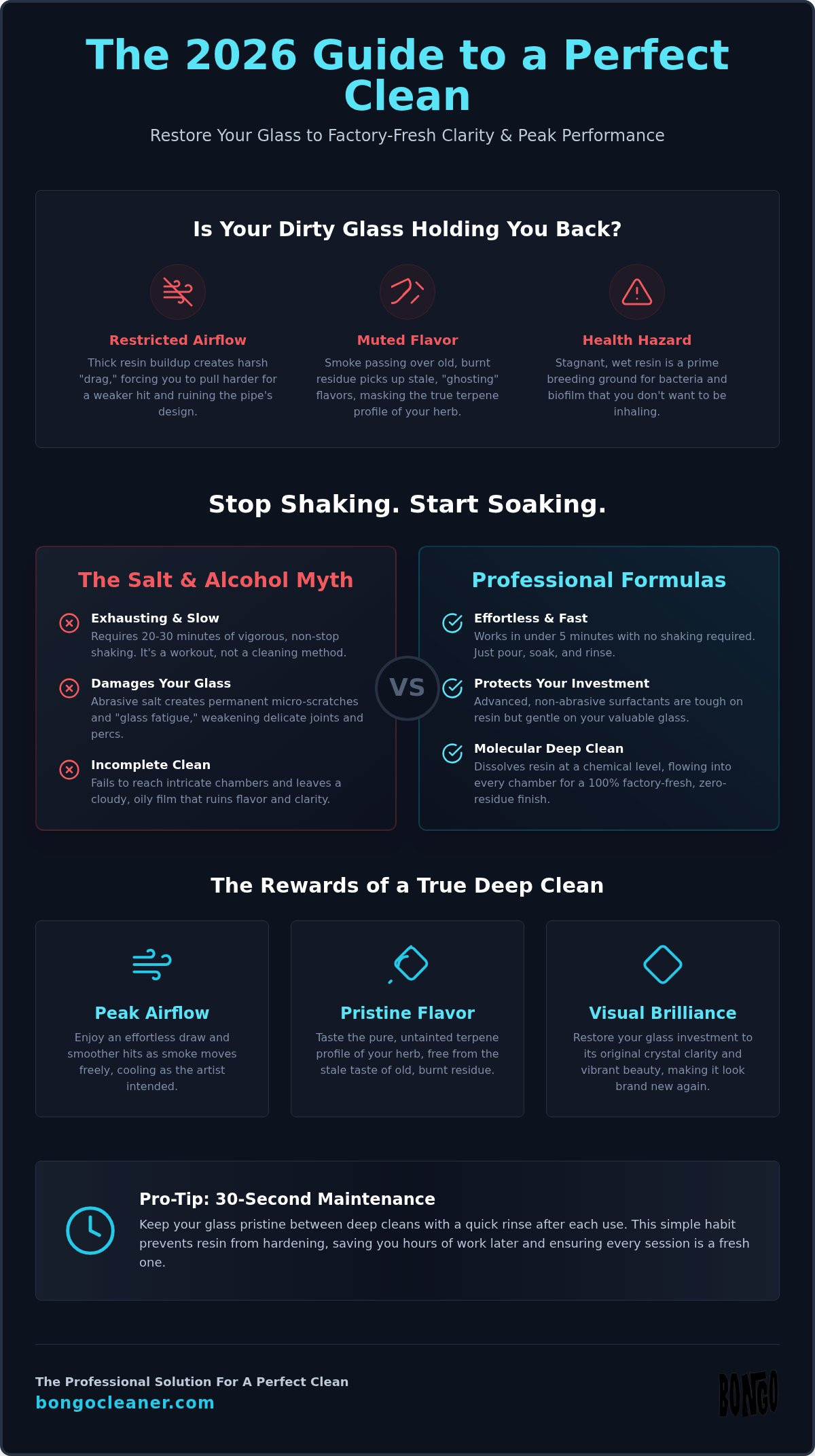
A true deep clean isn't a luxury; it's a performance requirement. We define a deep clean as the total removal of oxidized resin and tar from every internal surface. Over time, these materials solidify into a thick, stubborn layer. This buildup creates significant "drag." It physically restricts airflow, forcing you to pull harder for a weaker hit. If you're searching for the best way to clean a glass pipe, you have to understand that airflow is king. High-performance glass is designed for specific cooling and filtration. Resin ruins that engineering.
Flavor clarity is the next casualty. Terpene profiles are complex and fragile. When smoke passes over old, burnt residue, it picks up "ghosting" flavors. You stop tasting the nuances of your herb. Instead, you taste stale carbon. Beyond flavor, there's a real health concern. Stagnant resin is a breeding ground for bacteria and biofilm. Inhaling through a dirty pipe is like drinking from a glass that hasn't been washed in weeks. It’s a bio-hazard that compromises your lungs and your session.
The Science of Resin and Tar Accumulation
The bond between resin and borosilicate glass is intense. Heat and smoke create a sticky, carbon-rich layer that fuses to the surface at a molecular level. This isn't just surface ash that you can tap out. It's a dense, hydrophobic tar. Because tar repels water, simple rinsing is useless. It won't break the chemical bond. Traditional pipe cleaning tools and methods, like basic brushes, often struggle with the tight curves and percolators found in modern glass. You need a solution that dissolves the glue rather than just scraping the surface.
Performance Benefits of a Pristine Pipe
Restoring your glass to factory condition offers immediate rewards. You’ll notice an instant improvement in draw resistance. The smoke moves freely. It cools down as intended before it reaches you. This means smoother hits and significantly less throat irritation. You also regain the artistic value of your piece. Quality glassware is an investment. A deep clean brings back the crystal clarity and vibrant colors that made you choose it. Stop settling for "clean enough." Start demanding peak performance from your gear every time you use it.
The Salt and Alcohol Myth: Why Professional Formulas Win
The internet is obsessed with the salt and isopropyl alcohol method. It’s the "classic" recommendation. But in 2026, we know better. This DIY approach relies on physical force rather than chemical efficiency. You’re essentially shaking rocks inside your expensive glassware. This creates micro-scratches on the surface. These tiny abrasions trap resin deeper over time. It leads to that permanent "cloudy" look that no amount of scrubbing can fix. If you want the best way to clean a glass pipe, stop treating it like a science project from the 90s.
Beyond the visual damage, there is the issue of "glass fatigue." Constant physical agitation with coarse salt can weaken the structural integrity of thin glass joints and delicate percolators. You aren't just cleaning; you're slowly wearing your pipe down. Professional formulas eliminate this risk entirely. They use advanced surfactants to lift resin at the molecular level. No scrubbing. No shaking. Just pure chemical power that respects the material.
DIY vs. Professional Performance Metrics
Let’s talk about your time. A standard DIY session takes 20 to 30 minutes of vigorous shaking. It’s exhausting. A professional formula like Bongo Glass Cleaner works in under five minutes. No shaking required. There is also the residue factor. Alcohol often leaves a thin, oily film behind that affects your next session. Professional liquids rinse away completely, leaving zero streaks and zero "ghost" flavors. Safety is another concern. You must follow guidelines for safe handling of isopropyl alcohol to avoid skin irritation and harsh fumes. Professional cleaners are engineered for a faster, safer, and more effective user experience.
Protecting Your Investment
High-end borosilicate glass is an investment. It deserves non-abrasive care. Salt is useless for intricate percolators. It can’t reach the tight spaces where resin actually hides. It just gets stuck in the holes, further restricting your airflow. Liquid cleaners flow through every chamber and every slit. They dissolve tar on contact. This ensures your airflow remains perfect without the hassle of stuck salt crystals. For a deeper look at your options, check out our Glass Pipe Cleaning Liquid: The 2026 Professional Comparison Guide. It’s time to upgrade your routine. You can find the right tools at bongocleaner.com to keep your collection in factory-fresh condition without the DIY struggle.
The Ultimate Step-by-Step Glass Pipe Deep Clean Protocol
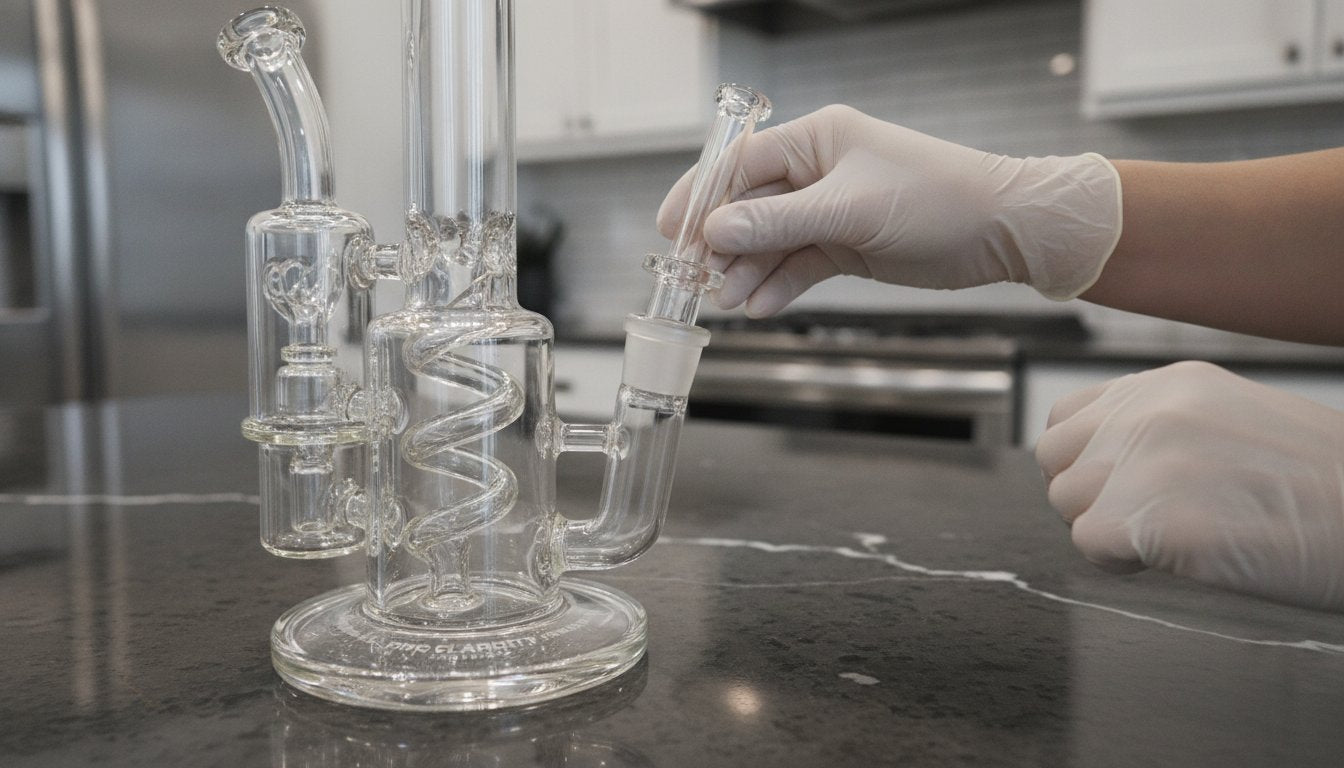
Stop guessing. Follow this professional protocol to achieve factory-fresh results every time. The best way to clean a glass pipe is through a methodical, chemical approach that respects the material while destroying the resin. You don't need luck. You need a process that works. Start by clearing your workspace. Use a silicone mat or a soft towel to protect your glass from hard surfaces. Grab your Bongo Glass Cleaner, a few plugs or caps, and warm water. Avoid using metal tools that can chip or scratch the borosilicate glass.
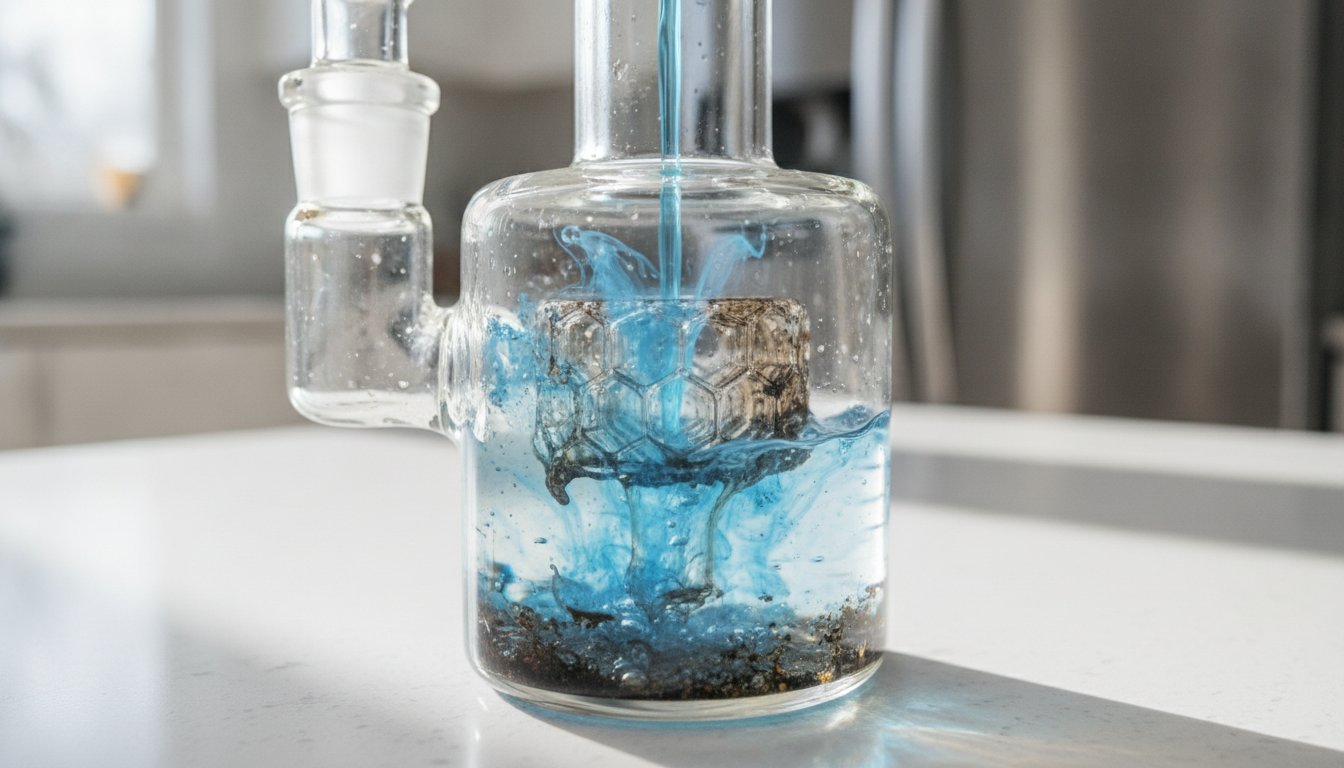
Pour the solution directly into the pipe. If you have a larger piece with multiple chambers, use specialized plugs to seal the openings. Ensure the liquid coats every internal surface, focusing on the bowl and the downstem where buildup is heaviest. Now, let the formula do the work. For standard residue, three to five minutes is enough. The cleaner targets resin at the molecular level, breaking the bond without the need for aggressive scrubbing. You'll see the liquid darken as it pulls the tar away from the glass.
Drain the solution and move to the final rinse. Use warm water to flush out the dissolved tar and any remaining cleaner. This step is critical for ensuring a pure flavor profile in your next session. If you see any stubborn spots, a quick second application will finish the job. Your glass should look invisible. Once the interior is clear, dry the exterior to prevent slips. This simple routine delivers professional results in a fraction of the time required by DIY hacks.
Deep Cleaning Small Pipes and Chillums
Small pieces like one-hitters present unique challenges. Their narrow mouthpieces and tiny carb holes trap resin in tight spaces where brushes can't reach. Use a small container to submerge the entire pipe in Bongo Glass Cleaner. This ensures the solution reaches every internal millimeter. For more specific tips on these pieces, check out our guide on How to Clean a Glass Chillum: The Professional Guide to Instant Clarity. It covers the nuances of maintaining smaller glass gear with precision.
Restoring Cloudy and Heavily Stained Glass
Neglected glass often develops a milky or cloudy appearance. This is usually a combination of hard water stains and deeply oxidized resin. To fix this, you need a longer soak. Let the piece sit in the cleaner for thirty minutes to an hour. This allows the surfactants to penetrate the toughest layers. Once the soak is done, rinse with distilled water to prevent new mineral spots. Dry the exterior with a microfiber cloth to ensure a streak-free finish. Your glass will look like it just came off the gallery shelf.
Maintenance Hacks for Daily Clarity and Peak Airflow
Stop waiting for the weekend to handle your glass. The best way to clean a glass pipe is to never let the resin harden in the first place. Efficiency is the name of the game. A simple 30-second rinse with hot water after your final session of the day makes a massive difference. Heat acts as a natural solvent. It keeps the tar in a liquid state. This allows it to wash away before it fuses to the borosilicate. You prevent that thick, crusty buildup that eventually requires aggressive intervention.
Heavy users should adopt the "Pre-Soak" strategy for immediate relief. Keep a small, sealed container of Bongo Glass Cleaner near your station. Drop your bowl or slide into it at the end of the night. By morning, the resin has vanished. This keeps your airflow at peak performance without any manual effort. Proper storage is also vital. Dust and pet hair love sticky surfaces. Store your pieces in a padded case or a dust-free cabinet. When debris mixes with resin, it creates a concrete-like substance that is significantly harder to remove.
Cleaning Accessories: Bowls, Downstems, and Slides
Accessories are the most fragile parts of your setup. Many people break their glass by using metal pokers or paperclips to clear clogs. Don't do that. It causes micro-fractures. Instead, use Bongo Glass Cleaner for small component restoration. A five-minute soak for your downstem ensures those tiny percolator slits stay open. Clear slits mean better bubbles and superior cooling. Your hits will stay smooth and your glass will stay safe. Grab your Bong Cleaner today to make these small parts shine like new.
Eliminating Stubborn Odors
Sometimes your glass looks clear, but it still smells like a forest fire. This happens because tar molecules remain trapped in microscopic pores or tight corners. Standard dish soap won't fix this. You need specialized solvents that neutralize odors at the molecular level. Bongo Glass Cleaner doesn't just hide the smell with perfumes. It destroys the source. Maintaining a scent-free collection is about removing every trace of organic matter. Clean your accessories daily and your main piece weekly to keep your environment fresh and your flavor profiles pure.
Restore Your Glass Instantly with Bongo Glass Cleaner
Stop settling for mediocrity. You’ve seen the science and you understand the risks of outdated DIY methods. Now, it's time to experience the definitive solution for the modern collector. Bongo Glass Cleaner is engineered for one thing: total restoration. It delivers the speed, power, and professional-grade results that standard household chemicals simply can't match. We’ve proven that the best way to clean a glass pipe involves chemical efficiency rather than physical force. Our formula targets resin at the molecular level, stripping away years of neglect in a matter of minutes.
The application is pure no-nonsense. You don't need a degree in chemistry or a gym membership for vigorous shaking. Just pour the solution, wait for the activation, and rinse. It’s that simple. You get immediate relief and a piece that looks like it just came off the gallery shelf. Join the thousands of enthusiasts who have already abandoned the salt and ISO routine. They made the switch because they value their time and their glass. They want a maintenance routine that works as hard as they do.
This isn't just about aesthetics. It’s about peak performance. When you use a professional-grade cleaner, you ensure your airflow remains unrestricted and your flavor profiles stay pure. You’ve invested in quality glassware; it’s time to invest in the care it deserves. Bongo provides the ultimate shortcut to a pristine session every single time. No scrubbing. No scratches. Just crystal clarity.
The Bongo Product Lineup
We offer specialized tools for every piece in your collection. Bongo Glass Cleaner is our all-purpose restoration king. It’s perfect for hand pipes, chillums, and intricate slides. For those with larger water pipes and complex percolators, our Bong Cleaner provides the heavy-duty power needed to reach every hidden chamber. Both formulas are designed to be the most effective resin remover for glass on the market. Whether you're dealing with daily buildup or a piece that’s been sitting for a year, we have the specific solution to bring it back to life.
Ready for Crystal Clarity?
The transformation from swampy, restricted glass to museum-quality art is incredible. You don't have to tolerate "ghosting" flavors or restricted draws anymore. Take control of your experience and restore your collection to its peak condition today. It’s time for a professional deep clean that delivers on its promise. Don't wait for the resin to win. Shop Bongo Glass Cleaner Now for Instant Results and experience the difference that professional engineering makes.
Elevate Your Session with Professional Clarity
Stop compromising on flavor and airflow. You now have the professional blueprint for maintaining a pristine collection. We've exposed why abrasive DIY methods fail and how specialized formulas protect your investment. Mastering the best way to clean a glass pipe is finally simple. It’s about choosing chemical power over physical force to maintain factory-fresh clarity. You don't need to spend hours scrubbing when you can achieve museum-quality results in a fraction of the time.
Ready to see the difference for yourself? Bongo Glass Cleaner dissolves resin on contact and delivers superlative clarity in under 5 minutes. This high-performance formula is trusted by professional glass collectors nationwide to keep their most valuable pieces in peak condition. Don't waste another second shaking a bag of salt or dealing with cloudy, restricted glass. Restore Your Glass Instantly with Bongo Glass Cleaner and take the first step toward a better experience. Your collection is an investment. Treat it with the respect it deserves and enjoy the pure, unadulterated flavor of a truly clean pipe.
Frequently Asked Questions
What is the absolute best way to clean a glass pipe quickly?
The best way to clean a glass pipe quickly is to use a professional liquid formula like Bongo Glass Cleaner. It eliminates the need for vigorous shaking or waiting overnight. Just pour the solution into your piece, let it sit for under five minutes, and rinse with warm water. You get instant results and crystal clarity without the hassle of traditional DIY methods.
Can I clean a glass pipe without using isopropyl alcohol?
You can absolutely clean your glass without isopropyl alcohol by switching to specialized professional formulas. These cleaners offer a safer, more efficient experience without the harsh chemical fumes associated with ISO. They utilize advanced surfactants to lift resin at the molecular level. This ensures a deeper clean while being much gentler on your skin and the environment.
How often should I perform a glass pipe deep clean?
Perform a deep clean once a week to maintain peak performance and flavor clarity. If you're a heavy user, you might need to do this every three to four days to prevent buildup. Regular hot water rinses help, but a weekly session with Bongo Glass Cleaner ensures that stubborn tar never has the chance to create permanent "drag" or airflow restrictions.
Is it safe to use boiling water to clean my glass pipe?
Avoid using boiling water as it can lead to thermal shock and structural failure. While high-quality borosilicate glass is durable, the extreme temperature jump from room temperature to boiling is dangerous. Use warm or hot tap water instead. It’s effective for daily maintenance and far safer for your expensive collection.
How do I remove the white cloudy film from my glass pipe?
Remove that stubborn cloudy film by performing a 30-minute soak with a professional-grade cleaner. This "milky" look is often a mix of hard water minerals and oxidized resin. A standard rinse won't touch it. A longer soak allows the formula to penetrate the buildup and restore the glass to its original, transparent state.
Will Bongo Glass Cleaner work on intricate percolators?
Bongo Glass Cleaner is specifically engineered to navigate intricate percolators and tight chambers. Unlike salt, which often gets stuck in small slits, our liquid formula flows freely through the entire piece. It dissolves hidden resin in every corner. This restores the intended airflow and filtration of your high-end glassware instantly.
How do I get the smell of resin out of my glass pipe permanently?
Eliminate resin odors permanently by removing every trace of organic matter with a professional solvent. Smells linger because tar is trapped in microscopic pores. Bongo Glass Cleaner neutralizes these odors at the source. It leaves your glass completely scent-free and ready for your next session without any "ghosting" from previous use.
Is Bongo Glass Cleaner safe for colored or fumed glass?
Our formula is perfectly safe for colored, fumed, and high-end borosilicate glass. It is a non-abrasive solution that respects the artistic finish of your pieces. You don't have to worry about scratching or stripping the color. It delivers a museum-quality shine while keeping the integrity of your most valuable glass intact.