Cart
0
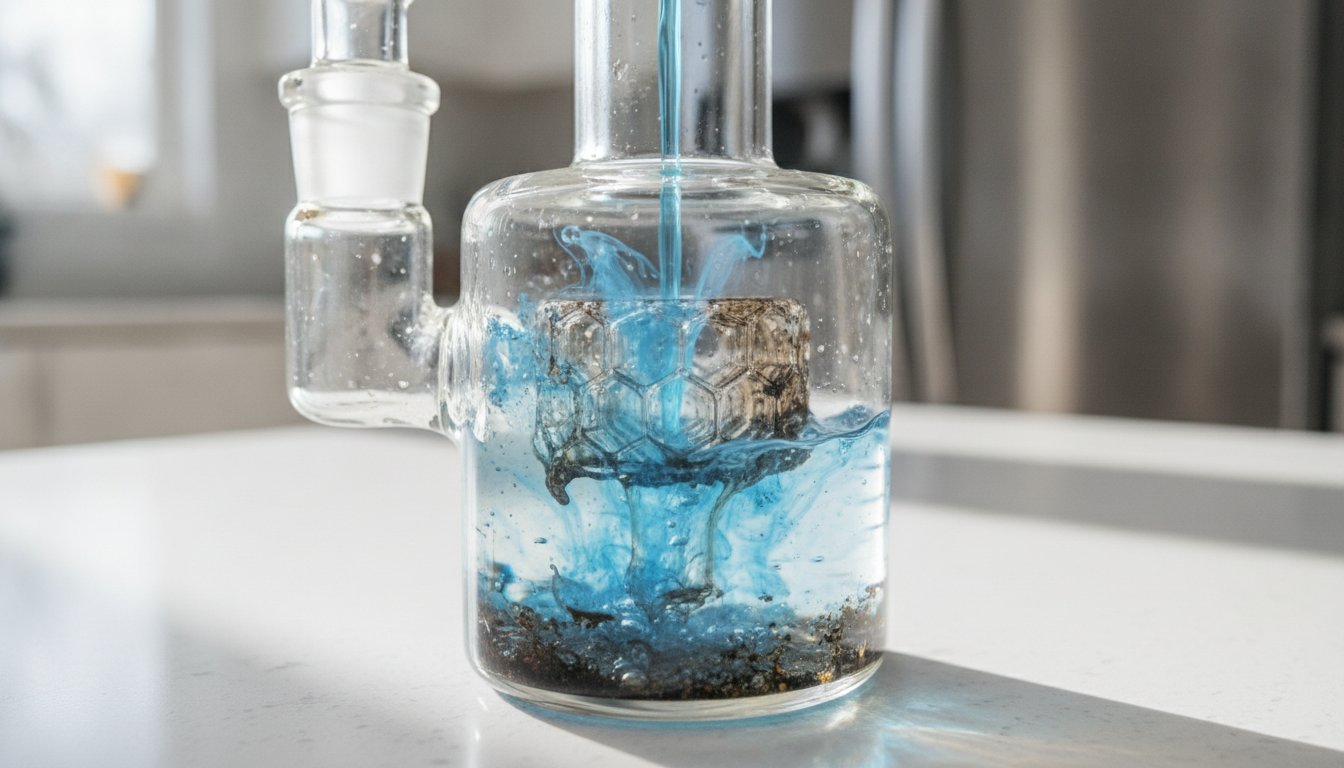
Your high-end percolator is a masterpiece of engineering, but right now, it’s a graveyard for stale resin and trapped salt. It’s a common frustration. You bought that complex glass for smooth hits, yet you’re stuck staring at cloudy chambers and blocked airflow. Learning how to clean a honeycomb percolator shouldn't feel like a failed chemistry experiment. You’re tired of lingering odors and stubborn salt granules that refuse to leave the tiny glass holes. We get it. Mechanical scrubbing is impossible in these tight spaces. Standard DIY methods often leave your piece looking worse than when you started.
Stop settling for "clean enough." This no-nonsense guide shows you how to achieve factory-level clarity without the abrasive DIY mess. We’re diving into professional liquid-only techniques that dissolve gunk on contact. You’ll discover how to restore peak performance, maximize flavor, and establish a cleaning routine that takes minutes. We’ll show you why specialized formulas like Bongo Glass Cleaner are the definitive choice for serious collectors who demand speed and reliability. Get ready for crystal-clear glass and effortless draws. It’s time to bring that bong back to life.
Key Takeaways
- Intricate glass designs like tree and honeycomb percs act as resin traps where traditional scrubbing is impossible.
- Avoid the salt nightmare. Learn how to clean a honeycomb percolator with high-performance liquids to prevent abrasive granules from clogging your glass.
- Switch to professional-grade solutions. Formulas like Bongo Glass Cleaner dissolve tar on contact for immediate, factory-level results.
- Master the professional routine. Start with a warm water rinse and use dedicated soaking methods to reach every hidden chamber.
- Keep your glass pristine. A quick daily rinse prevents heavy buildup and keeps your airflow at peak performance.
The Percolator Complexity Trap: Why Your Bong Stays Dirty
Your Bong is more than a glass pipe; it's a precision instrument. Percolators are designed to maximize surface area for cooling. They turn a harsh hit into a silky cloud. But there's a trade-off. Those same intricate pathways act as the ultimate resin trap. Every bubble creates a point of contact for tar and ash to cling to. Over time, these particles accumulate in "dead zones" where water pressure is too low to flush them out. You end up with a beautiful piece of glass that functions like a clogged drain. Visual clarity isn't just about aesthetics. It's the only way to know your smoke isn't passing through a layer of old, hardened waste.
Anatomy of a Dirty Perc: Tree, Honeycomb, and Beyond
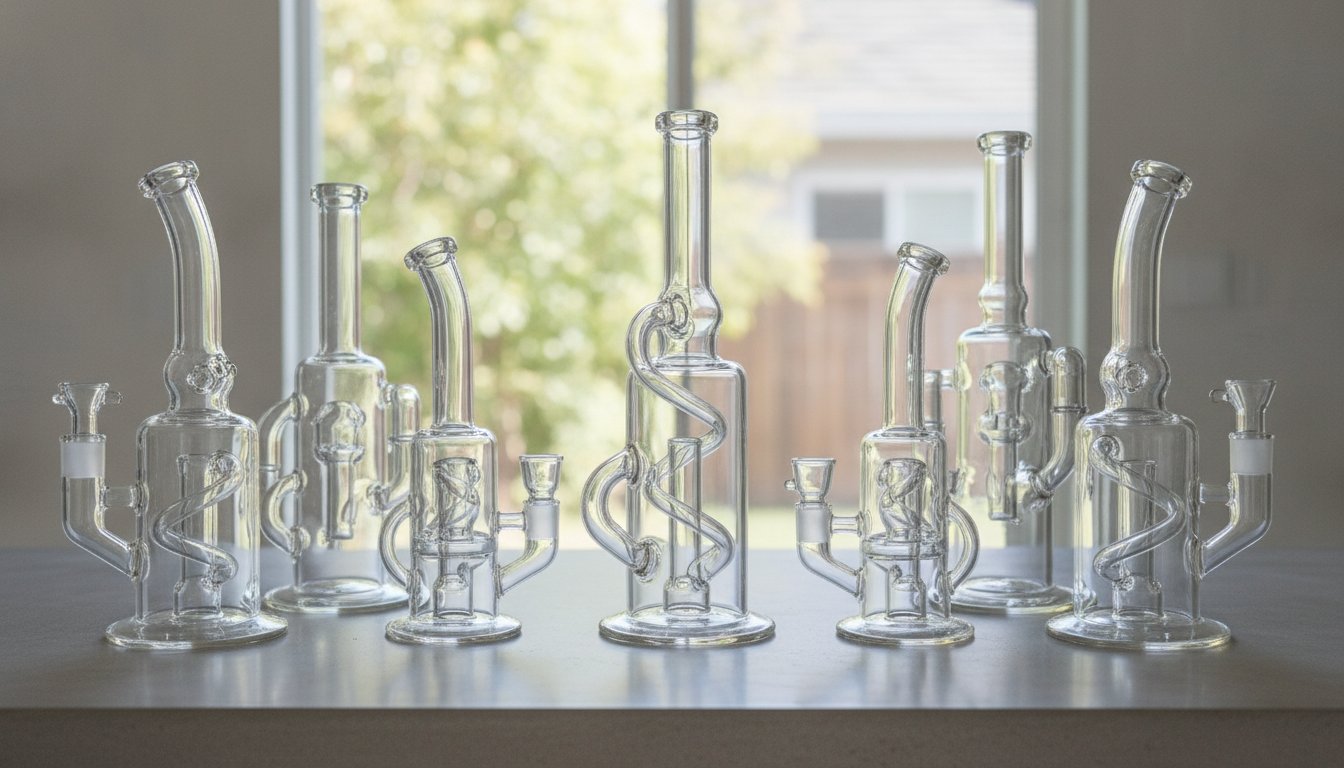
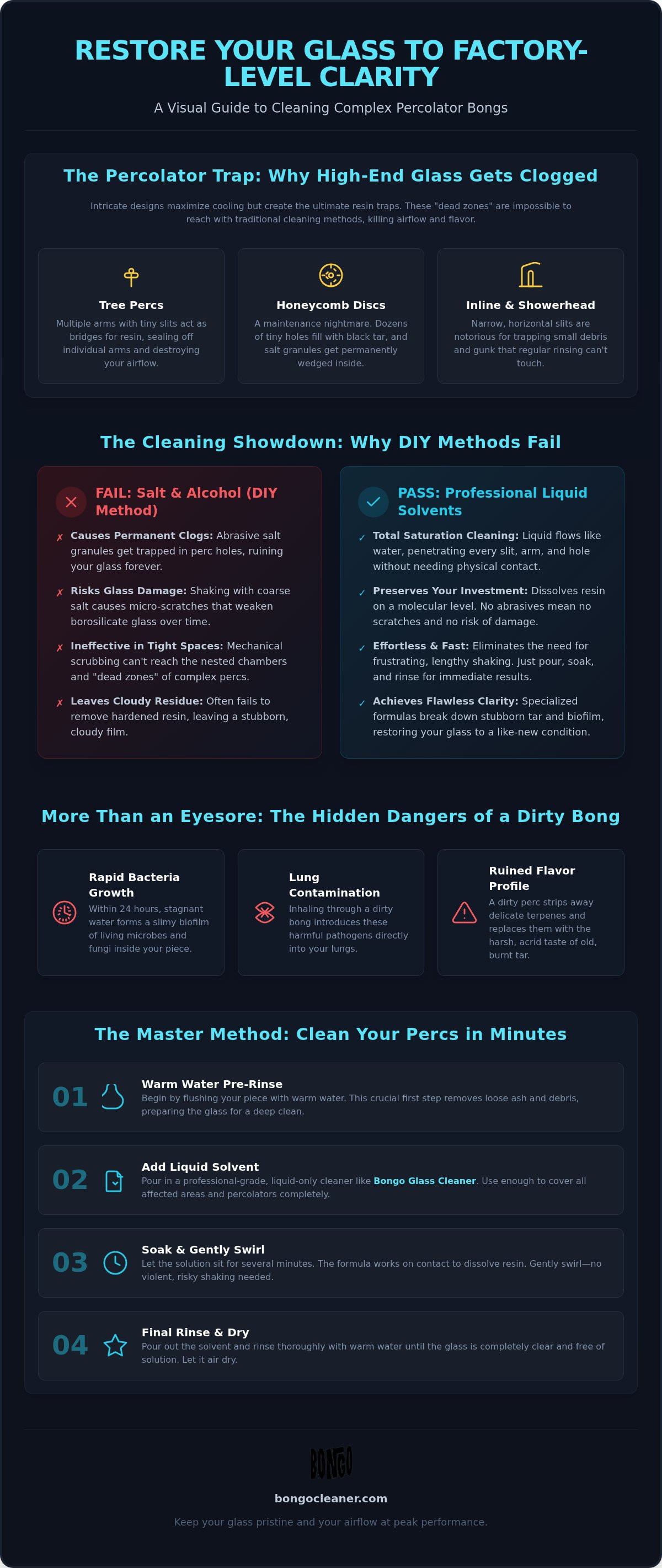
Every percolator style has its own unique weakness. Tree percs feature multiple arms with tiny slits. Resin loves to bridge these gaps, effectively sealing off individual arms and killing your airflow. Inline and showerhead percs use horizontal slits that are notorious for trapping small debris. These narrow openings become bottlenecks for gunk that regular rinsing can't touch. Once the buildup starts, it accelerates. More resin sticks to the existing layers, creating a snowball effect of filth.
Then there's the honeycomb disc. These flat glass plates are perforated with dozens of tiny holes. While they provide excellent diffusion, they are a nightmare for maintenance. If you're struggling with how to clean a honeycomb percolator, you've likely seen how quickly those holes fill with black tar. Traditional methods often fail here because you can't reach the center of the disc with a brush. If you use salt, the granules get wedged in the holes, creating a permanent clog that ruins the piece.
The Health Risk of Neglected Glass
A dirty perc isn't just an eyesore. It's a biohazard. Stagnant water in these tight chambers is the perfect environment for rapid bacterial growth. Within 24 hours, a slimy biofilm begins to coat the glass. This isn't just resin; it's a living colony of microbes and fungi. Inhaling through this mess introduces pathogens directly into your lungs. You can read more about why is a dirty bong bad for you in our comprehensive health guide. Biofilm is stubborn and resists basic water rinses, requiring a chemical solution to break it down completely.
Beyond safety, there's the issue of pure performance. A dirty perc acts like a filter in reverse. It strips away the delicate terpenes of your legal herbs and replaces them with the acrid flavor of old, burnt tar. Mastering how to clean a honeycomb percolator ensures that every hit tastes exactly as the grower intended. Don't let a "dead zone" ruin your top-shelf experience. Demand factory-level clarity every time you smoke.
Why DIY Cleaning Fails Intricate Glass Percolators
Don't fall for the "old school" advice. Most internet forums suggest high-percentage isopropyl alcohol and coarse salt for every situation. This works for simple tubes. It fails miserably for complex glass. The physics just don't add up. Salt is a solid abrasive. For it to work, it must physically strike the resin. In a nested chamber, the salt can't reach the corners. It hits the outer walls and settles. Even worse, those coarse granules often become a permanent, rattling fixture in your glasswork. You aren't just cleaning; you're risking your investment for a mediocre result.
The Mechanical Failure of Salt and Alcohol
When scientists handle delicate equipment, they follow a Standard Operating Procedure for glassware cleaning that prioritizes chemical dissolution over physical force. Shaking a heavy piece filled with abrasive salt is dangerous. It causes micro-scratches on borosilicate. These tiny abrasions weaken the glass over time. Eventually, those scratches turn into cracks. Rinsing salt out of a triple-perc bong is a 20-minute exercise in frustration. You flip the piece. You shake it. You still hear that rattling sound of trapped granules. If you're learning how to clean a honeycomb percolator, you need to understand that salt is the enemy. It gets wedged in the tiny holes of the disc. Once it's in there, it acts like a plug. You're left with a cloudy, salt-stained piece that hits worse than before you started.
The Professional Alternative: Liquid-Only Solvents
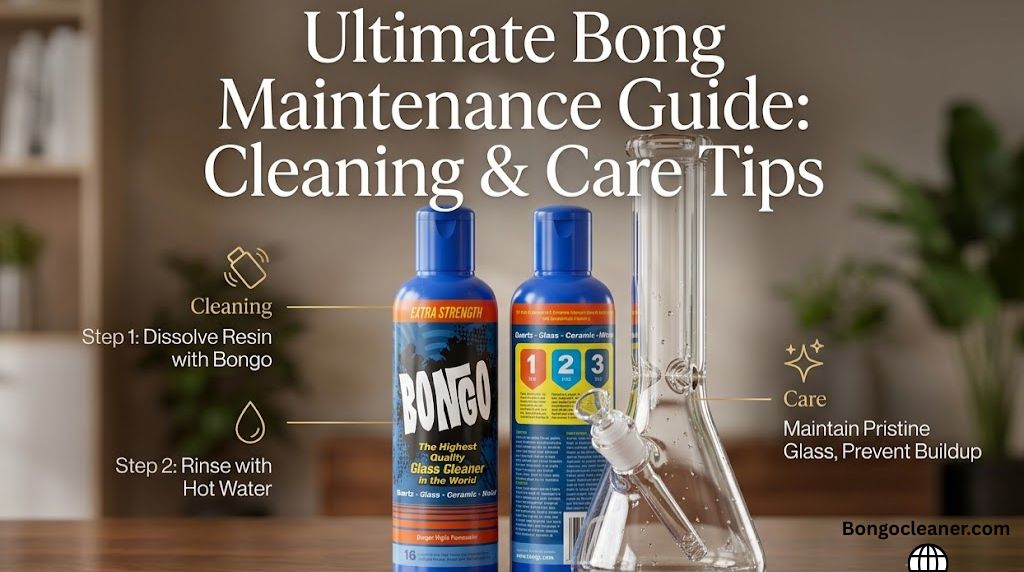
There's a better way. Professional collectors use liquid-only solvents that flow like water. These formulas penetrate every slit, arm, and hole without the need for physical contact. They dissolve resin on a molecular level. This is the secret to how to clean a honeycomb percolator without the stress. You don't need to shake your glass like a madman. You just pour, soak, and rinse. A high-performance Bong Cleaner like Bongo Glass Cleaner targets tar specifically. It leaves your glass with factory-level clarity in seconds. No salt. No scratches. No trapped particles. Just pure, clean glass that's safe to use. You get an immediate, transformative result that restores your piece to its peak condition without the DIY headache.
Comparing the Best Bong Cleaning Solutions for 2026
Performance in 2026 is measured by two metrics: speed and safety. Traditional DIY methods rely on the "Shake and Pray" philosophy. You pour in harsh chemicals and salt, then shake your expensive glass like a cocktail. It's primitive. It's exhausting. Professional collectors have moved on. They prioritize the "Pour and Rinse" method. This approach uses high-performance, liquid-only solvents that penetrate nested chambers instantly. When you're looking at how to clean a honeycomb percolator, the difference in time is staggering. An overnight isopropyl alcohol soak might eventually work. A professional formula does the job in under sixty seconds.
Bongo Glass Cleaner vs. The Competition
The market is flooded with generic soaps and basic alcohols. Most of these require hours of soaking or aggressive mechanical action to be effective. Bongo Glass Cleaner changes the game. It features a proprietary formula that targets resin and tar on contact. Unlike the competition, Bongo products contain zero abrasive particles. This means zero risk of clogs or scratches. You get instant results without the manual labor. Check out The Ultimate Guide to Bongo Glass Cleaner Mastery to see how to achieve crystal-clear results every single time. Our formula is designed for immediate relief, transforming a mundane chore into a satisfying, effortless win.
Protecting Your Glass Investment
High-end borosilicate glass is a serious investment. Treating a $300 percolator bong with "laundry-grade" hacks or hardware store chemicals is a recipe for disaster. These methods often leave behind cloudy films or chemical odors that ruin your next session. Resin remover for glass is a specialized chemical restoration tool engineered to strip away carbonized buildup and organic tar without compromising the structural integrity of borosilicate. The cost-benefit analysis is clear. Using a professional solvent is significantly cheaper than replacing a shattered piece or a permanently clogged percolator. Professional tools offer:
- Extreme Speed: Dissolve resin on contact without the wait.
- Absolute Safety: No mechanical stress or micro-scratches on delicate glass.
- Total Clarity: Restore factory-level shine with zero residue left behind.
- Maximum Value: Extend the lifespan of intricate glasswork indefinitely.
When you master how to clean a honeycomb percolator using the right tools, you aren't just cleaning. You're performing professional maintenance. This ensures peak flavor and maximum airflow for years to come. Don't settle for "good enough" when you can have perfection in seconds. Choose the solution that respects your time and your glass.
The Master Step-by-Step: How to Clean Percolator Bongs Fast
Efficiency is the name of the game. You don't want to spend an hour hovering over a sink. You want results. Moving from the "why" to the "how" requires a methodical approach that prioritizes your glass's safety and your time. This professional routine eliminates the guesswork. It targets the resin hidden deep inside those complex chambers. By following these steps, you'll restore your piece to its peak condition with zero frustration. Let's get to work.
Step 1-3: Prep and Initial Soak
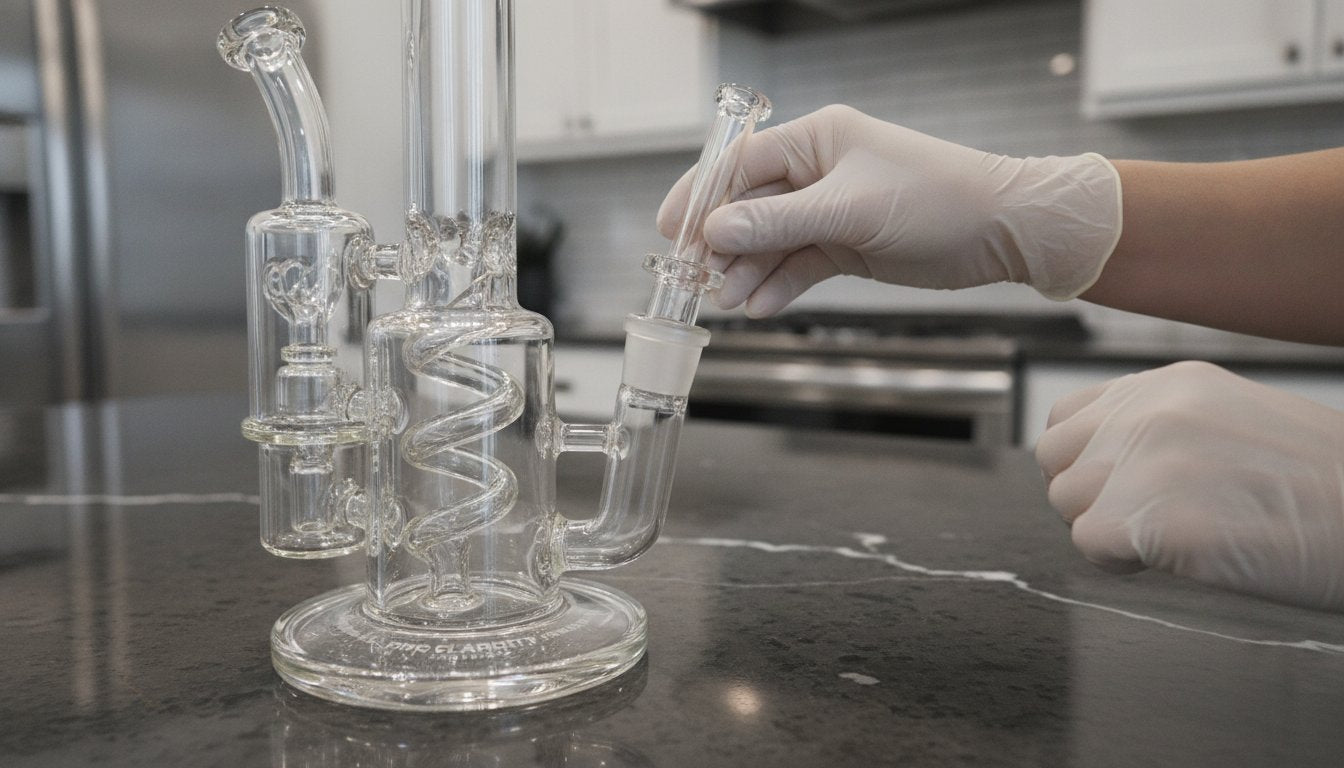
Start by stripping the piece down. Remove the bowl and downstem. Clean these separately to avoid accidental chips or breaks. Your first move is an initial rinse. Use warm water. Avoid boiling water as it can cause micro-fractures in high-end borosilicate. This rinse flushes out loose ash and softens the heavy resin layers. It prepares the surface for the chemical reaction to follow.
Now, pour your Bongo Glass Cleaner directly through the mouthpiece. This ensures the top percolators get the first hit of the solvent. Here is where most people fail: they can't get the liquid into the middle chambers. This is the secret of how to clean a honeycomb percolator effectively. If the liquid is sitting on top of a disc, blow gently into the mouthpiece. This light air pressure forces the cleaner through the tiny holes and into the nested chambers below. You need that 100% saturation to ensure no "dead zones" remain. Once the percs are primed, you're ready for the magic to happen.
Step 4-6: Agitation and Rinsing
Plug the mouthpiece and the joint. You don't need to shake the piece like a marathon runner. Gentle movements are better. Tilt the bong slowly to ensure the formula coats every internal surface 360 degrees. Let the piece sit for 1 to 2 minutes. You'll actually see the resin dissolve on contact, turning the liquid dark as it strips away the gunk. This chemical dissolution is safer and faster than any salt-based scrubbing method.
The final phase is the flush. Use lukewarm water to rinse the piece thoroughly. Keep rinsing until the water runs perfectly clear and the glass sparkles. Check the honeycomb holes for any lingering particles. Because you used a liquid-only solvent, everything should wash away effortlessly. If you want this level of factory clarity every time, buy Bongo Glass Cleaner and stop struggling with outdated methods. You're left with a piece that looks brand new, smells fresh, and delivers the pure flavor you deserve. No trapped residue. No chemical scent. Just perfection.
Maintenance for Peak Performance and Flavor
Consistency is the secret to a perfect session. Don't wait for your glass to turn black before you take action. Maintenance isn't about deep scrubbing every hour; it's about smart, rapid habits that protect your airflow. A 30-second daily rinse with warm water prevents the "resin ring" from bonding to your glass. This simple move stops the accumulation of tar before it can settle into those impossible-to-reach chambers. If you're consistent, your piece will always look and hit like it's brand new. Stop treating cleaning as a weekend chore and start treating it as a performance strategy.
Cloudy glass is a common buzzkill. If your percolator looks foggy even after a thorough wash, you're likely dealing with hard water stains. Mineral deposits from tap water cling to borosilicate, creating a dull film that ruins visual clarity. To prevent this, use distilled water for your final rinse. It's a small step that ensures your honeycomb discs stay sparkling. When it comes to storage, keep your glass in a dust-free environment. Dust particles can settle into the percs, mixing with moisture to create a stubborn sludge that's harder to remove later. Protect your investment with proper care.
The 2026 Bong Maintenance Schedule
A professional routine requires a clear plan. We've developed the How Often to Clean Your Bong guide to help you stay ahead of the gunk. Most collectors benefit from a "Daily Refresh" combined with a "Weekly Deep Clean." You'll know it's time for a deep clean when you spot the early signs of resin buildup. Look for a slight amber tint in the water or a decrease in bubble stack height. These are red flags that your percs are beginning to clog. Knowing how to clean a honeycomb percolator effectively means recognizing these signs before they kill your flavor profile.
The Bongo Advantage for Long-Term Clarity
Bongo Glass Cleaner doesn't just strip away gunk; it restores the glass surface to its peak condition. Our formula is engineered to be fast and effective, ensuring you spend more time enjoying your piece and less time at the sink. The sensory benefits are immediate. You'll taste the delicate terpenes of your legal herbs, not the stale, acrid notes of old tar. Using a high-performance solvent also makes future sessions easier to manage. It leaves the glass so clean that resin has a harder time finding a foothold. Don't settle for a dirty, restricted draw. Demand the best for your glass and your lungs. Restore your glass with Bongo Glass Cleaner today!
Restore Factory-Level Clarity Today
Intricate glass demands a specialized approach. You now know that outdated DIY methods like salt and alcohol often cause more harm than good. They lead to trapped granules and micro-scratches that ruin high-end borosilicate. Mastering how to clean a honeycomb percolator requires a liquid-only solution that flows into every nested chamber. This professional approach ensures total resin removal without the mechanical stress of shaking or scrubbing. By switching to a high-performance routine, you protect your investment and guarantee peak flavor for every session.
Don't let stubborn gunk restrict your airflow or ruin your legal herbs. You deserve a piece that looks and performs like it just came off the shelf. Our formula is engineered for speed, safety, and absolute clarity. It's time to experience the transformative power of a cleaner that actually works. Get the Professional Bongo Glass Cleaner Now. This specialized solution dissolves resin on contact with no salt or abrasives needed. It's the definitive choice trusted by glass collectors nationwide. Stop struggling and start enjoying your crystal-clear glass again. It's that easy.
Frequently Asked Questions
How do I get cleaning liquid into the middle percolator of my bong?
Use air pressure to move the liquid through the internal chambers. Pour your cleaner into the mouthpiece and blow gently to force the solution through the top disc and into the middle sections. It’s the most effective way to ensure 100% saturation in nested designs. Don’t rely on gravity alone to reach the "dead zones" in complex glasswork. This priming step ensures every surface gets treated.
Is it safe to use boiling water to clean a glass percolator bong?
Never use boiling water on your glass bongs. The extreme temperature difference can cause thermal shock, which leads to micro-fractures or even instant shattering. Stick to lukewarm or warm water for all rinsing steps. It’s effective enough to loosen surface debris without risking the structural integrity of your expensive borosilicate piece. Safety should always be your top priority when handling intricate glass.
What is the best way to clean a honeycomb percolator without salt?
Use a high-performance liquid solvent that dissolves resin on contact. Learning how to clean a honeycomb percolator without salt prevents permanent clogs and unsightly scratches. Specialized formulas like Bongo Glass Cleaner penetrate the tiny holes of the disc effortlessly. You get factory-level clarity in seconds without the need for abrasive granules that often get permanently wedged in your glasswork. It's the faster, safer alternative.
How do I remove hard water stains from inside a percolator chamber?
Rinse your piece with distilled water to eliminate mineral deposits and restore shine. Hard water stains are caused by calcium and magnesium in tap water clinging to the glass. If the stains are already present, a quick soak in a specialized glass cleaner often removes the film. Always finish your cleaning routine with a distilled water flush to ensure a spot-free, crystal-clear finish every single time.
Can I use vinegar and baking soda to clean a percolator bong?
This DIY method is largely ineffective for heavy resin and tar buildup. The reaction between vinegar and baking soda creates carbon dioxide and water, which doesn't actually dissolve cured resin. It won't reach into the intricate slits of a percolator properly. You’ll end up with a messy residue and a bong that’s still dirty. Stick to professional solvents for real results and immediate relief.
How often should I clean my percolator bong to prevent mold?
Change your water after every session and perform a deep clean at least once a week. Mold and biofilm can begin to form in stagnant water within 24 hours. Regular maintenance keeps your airflow smooth and your flavor profile pure. If you notice a slight amber tint or a cloudy film, it’s time to use your how to clean a honeycomb percolator skills to restore clarity.
What do I do if salt is already stuck in my percolator holes?
Dissolve the trapped salt by submerging the percolator in warm water for an extended period. Don't try to shake it out, as the abrasive granules can scratch the internal glass. Patience is key. The water will eventually break down the salt crystals and flush them away. In the future, avoid using salt altogether and switch to a liquid-only cleaner to prevent this frustrating nightmare from happening again.
Is Bongo Glass Cleaner safe for all types of glass bongs?
Yes, our formula is perfectly safe for high-end borosilicate and standard glass accessories. It’s a non-abrasive solution that targets resin and tar specifically without damaging the glass surface. You don't have to worry about chemical damage or structural weakening. It’s the professional choice for collectors who want to maintain the value and clarity of their intricate glass pieces without any risk or hassle.