Cart
0
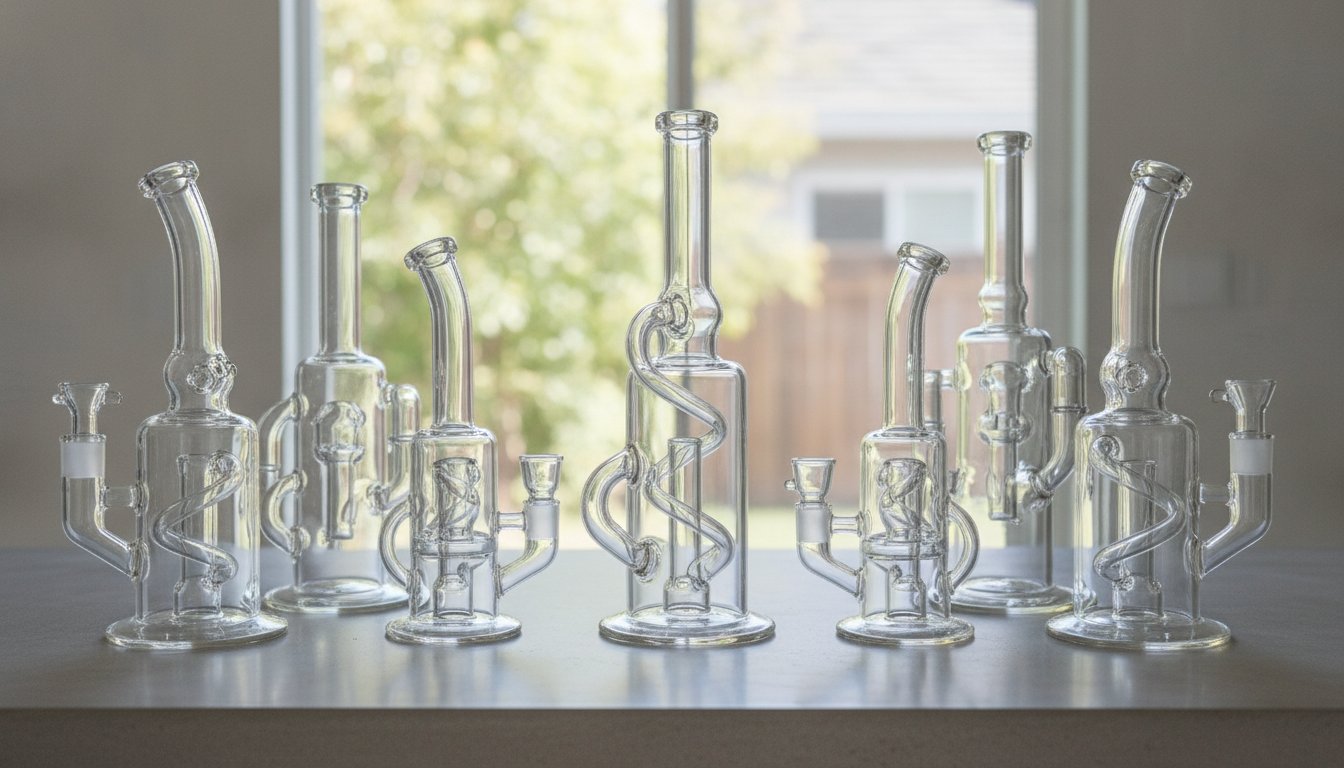
Your glass isn't just dirty. It is chemically bonded to a layer of stubborn, hydrophobic filth that traditional DIY methods simply cannot break. You've likely wasted hours shaking messy bags of salt and alcohol, only to end up with cloudy results and a lingering, foul odor. Using a professional-grade resin remover for glass is the only way to bypass the struggle and avoid the constant risk of accidental breakage. Stop the scrubbing. You deserve a better experience.
We understand the frustration of a piece that never feels truly clean. You want that factory-room shine without the manual labor or the fear of a costly crack. This guide reveals the chemical secrets behind professional restoration. Discover how specialized formulas disrupt these molecular bonds to deliver an instant, crystal-clear finish with zero effort. We're breaking down the science of resin buildup and the high-performance solutions that protect your investment. Get ready to transform your routine and enjoy the pure, pristine clarity your glass was designed for.
Key Takeaways
- Understand the molecular bond between resin and glass to stop fighting physics and start cleaning smarter.
- Learn how a two-pronged attack of surfactants and solvents dissolves stubborn tar and carbon byproducts on contact.
- Compare the risks of abrasive DIY methods against the safety and speed of a professional resin remover for glass.
- Follow a proven restoration workflow to clean complex percolators and hard-to-reach areas with zero effort.
- Discover how Bongo Glass Cleaner delivers instant, professional-grade clarity while protecting your expensive glassware investment.
Why is Resin so Difficult to Remove from Glass?
Resin is a chemical nightmare. It isn't just "dirt" that you can rinse away with a quick splash of water. It is a dense, complex mixture of tars, lipids, and carbon byproducts. These substances are notoriously stubborn. They form a tight molecular bond with the glass surface. Over time, this bond becomes nearly unbreakable without professional intervention. Understanding the chemistry of resins is essential to realizing why standard household cleaners fail. Most common debris is water-soluble. Resin is the exact opposite. It's oily. It's thick. It's designed by nature to stay put.
The heat factor complicates the process even further. Every use cycles high temperatures through your glassware. This heat causes microscopic expansion in the glass. Resin seeps into these tiny pores. As the glass cools, it traps the particles inside. You're effectively baking the grime into the very structure of your piece. This is why a dedicated resin remover for glass is mandatory for anyone serious about maintenance. Water and soap fail because they cannot penetrate these non-polar molecules. You're just sliding bubbles over a waterproof shield of tar. It's a waste of time.
The Sticky Science of Tar and Lipids
Think of resin as a hydrophobic fortress. Plant oils create a waterproof barrier that repels standard liquids. This is why your glass feels slimy yet remains filthy after a rinse. Oxidation adds another layer of difficulty. When resin is exposed to air, it hardens. It transforms from a gooey liquid into a crusty, cement-like solid. You need a specialized solvent to disrupt this barrier. A high-quality resin remover for glass targets these lipids directly. It breaks them down at the molecular level. No more scrubbing. No more struggle. Just instant results.
How Dirty Glass Impacts Performance
Dirty glass is a performance killer. Resin buildup narrows the internal pathways of your piece. This restricts airflow. You have to work harder for every single draw. The flavor suffers immediately. Old resin is packed with stale, burnt carbon that masks delicate terpene profiles. It tastes like ash. Most importantly, dirty glass is a safety risk. Uneven resin layers create dangerous hot spots during use. This leads to intense thermal stress. A dirty piece is significantly more likely to crack or shatter. Clean glass isn't just about aesthetics. It's about protecting your investment and your experience.
How Chemical Resin Removers Actually Work
Forget the "shake and pray" method. Brute force is a recipe for broken glass and mediocre results. True restoration requires precision chemistry. A professional resin remover for glass is a specialized solvent engineered to disrupt non-polar bonds. While water molecules are polar, resin is strictly non-polar. They repel each other. You need a chemical bridge to break the stalemate and achieve factory-room clarity. It's about working smarter, not harder.
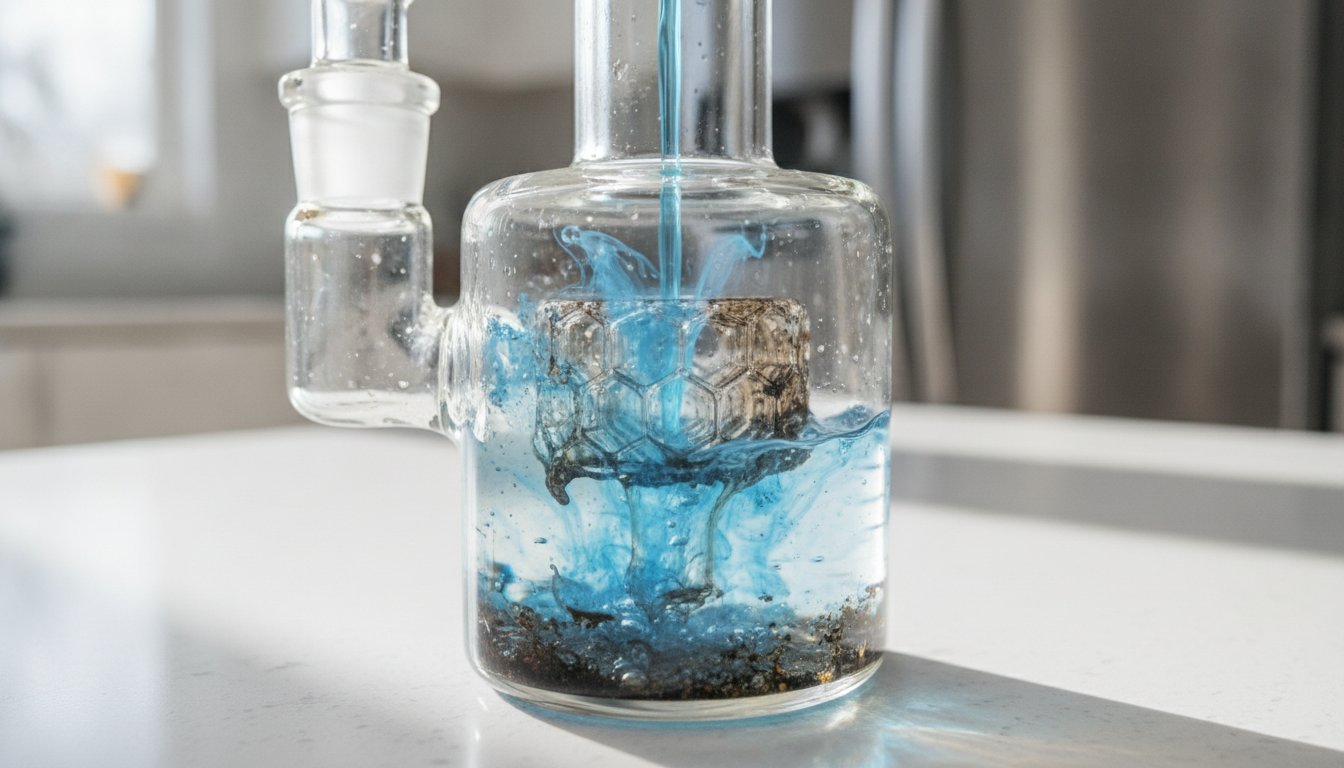
Professional formulas launch a high-energy, two-pronged attack on glass gunk. It starts with surfactants. These agents lower the surface tension of the liquid. This allows the cleaner to flood into microscopic crevices and complex percolators where brushes simply cannot reach. Once the liquid makes contact, the solvents take over. They dissolve the tar and lipids instantly. This process is known as emulsification. It transforms thick, sticky resin into a thin, rinseable liquid that washes away with ease. No more scrubbing. No more stress.
The Mechanism of Molecular Disruption
Effective cleaning happens from the bottom up. The solution penetrates the dense resin layer to reach the glass-resin interface. Once there, it employs a "Lift and Lock" mechanism. It detaches the particles and keeps them suspended in the solution. This prevents the gunk from re-depositing on your glass as you pour it out. A resin solvent is a chemical agent that lowers the activation energy required to break lipid chains. This rapid molecular breakdown is why Bongo Glass Cleaner delivers such immediate results. You're witnessing a chemical transformation, not just a surface-level wipe.
Neutralizing Odors at the Source
Resin smells because it's alive with volatile organic compounds (VOCs). These compounds evaporate into the air, creating that familiar, foul stench. Most DIY solutions try to mask this with heavy scents or essential oils. It's ineffective. Professional formulas use encapsulation technology. They surround odor-causing molecules and trap them within the liquid. It stops the release of VOCs entirely. When you rinse the piece, the smell disappears forever. You get that "new glass" scent because the source of the odor is gone. When working with these potent formulas, always prioritize safety. Check a Solvent Safety Manual for proper handling and ventilation tips to keep your cleaning space secure.
Comparing Resin Removal Methods: Abrasives vs. Solvents
Choosing the right cleaning method is the difference between a quick fix and a total restoration. For years, the community relied on salt and alcohol. It works, but it is primitive. Modern glassware features intricate percolators and delicate internal structures that require a more sophisticated resin remover for glass. You need to match the method to the piece. Using the wrong tool won't just leave gunk behind. It could permanently ruin your investment.
Professional-grade cleaners often combine both worlds. They use specialized solvents to melt the tar and controlled abrasives to provide physical friction. This dual-action approach is essential for heavy buildup on flat surfaces. However, for complex recyclers or multi-arm percs, a soak-only formula is the safer bet. You can't reach those tight corners with a brush or salt crystals. Chemical saturation is the only way to ensure every microscopic pore is purged of residue.
Why Salt and Alcohol Might Be Damaging Your Glass
Salt is a hard crystal. When you shake it vigorously, you're essentially sandblasting the interior of your piece. These micro-abrasions are invisible at first. Over time, they create a permanent cloudy finish. Then there is the alcohol issue. Most people grab 70% isopropyl from the pharmacy. It's too weak. The high water content prevents it from fully dissolving the hydrophobic resin layers. You end up with a sticky, streaky mess. If you want to see how the pros achieve a factory shine, check out The Ultimate Guide to Bongo Glass Cleaner Mastery for better results.
The "Soak vs. Shake" Debate
Efficiency is the ultimate goal. For daily maintenance, the "Quick Shake" method is king. You need a formula that works in under 60 seconds to keep your glass pristine. But for a total restoration of a neglected piece, a 24-hour soak is mandatory. It allows the chemistry to do the heavy lifting. Consider these efficiency metrics for your next session:
- Quick Shake: Best for flat surfaces and daily use. High speed, low effort.
- Deep Soak: Best for complex percolators. Zero scrubbing required, maximum clarity.
High-end borosilicate glass is durable but sensitive. Professional resin remover for glass is engineered to be non-corrosive and safe for high-quality materials. It protects the integrity of the glass while delivering a level of clarity that DIY methods simply cannot touch. Stop settling for "clean enough" and start demanding professional results.

Maximizing Efficiency: Best Practices for Stubborn Resin
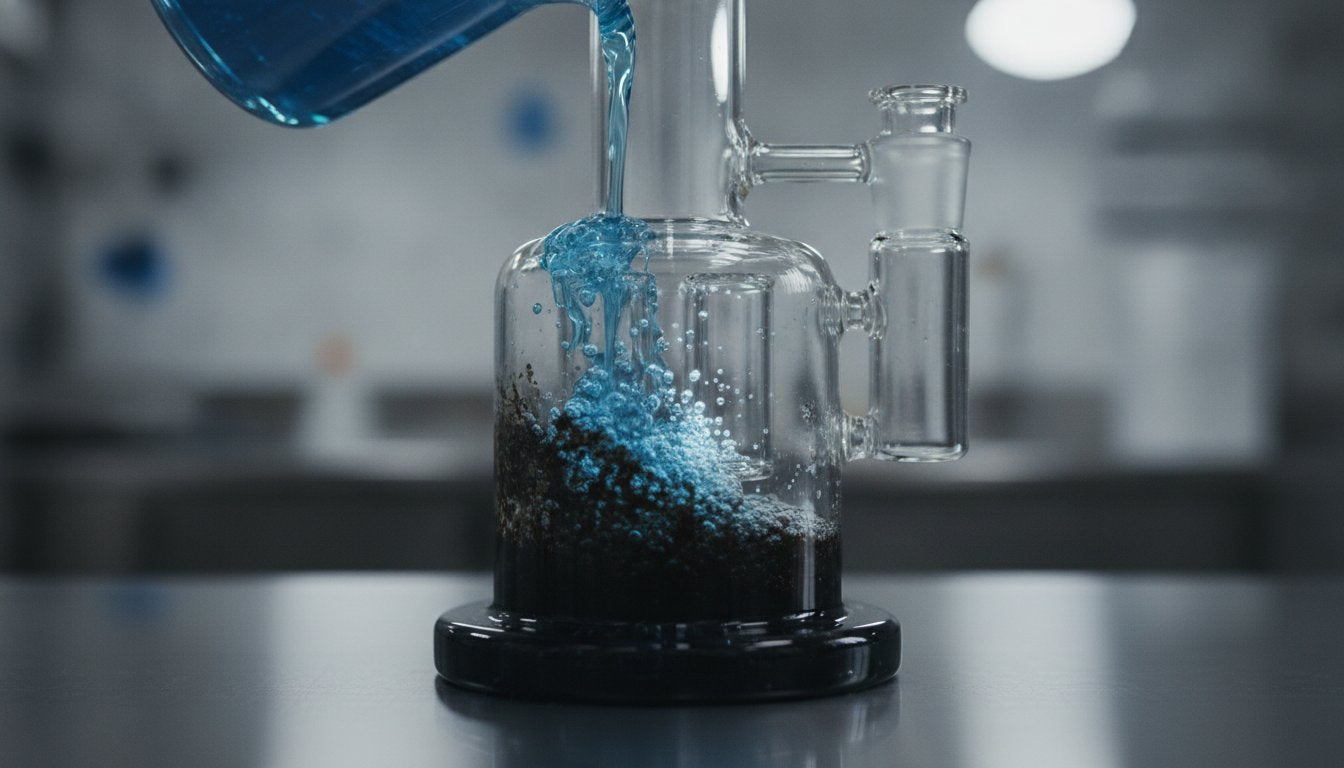
Efficiency is the difference between a five-minute refresh and a forty-minute struggle. You don't need to spend your afternoon scrubbing. You just need a better process. Start with a warm water pre-rinse. This isn't meant to clean the piece, but to soften the surface-level gunk and prepare the lipids for chemical disruption. Once the glass is warm, pour in your professional resin remover for glass. You'll see the liquid begin to darken almost immediately as the molecular bonds break apart.
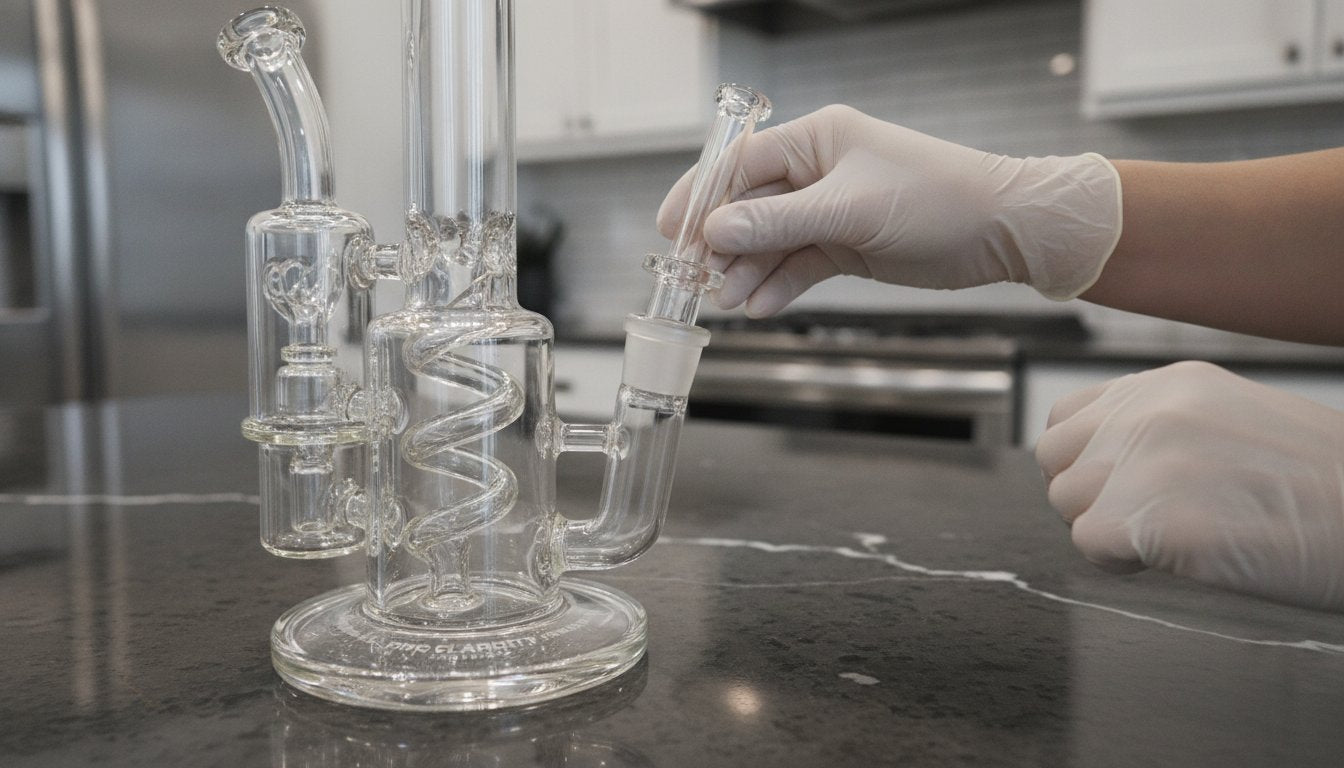
The agitation phase is where most people make mistakes. Don't just shake blindly. Use silicone plugs to seal every opening. This creates internal pressure that helps the solution penetrate deeper into the grime. Move the liquid in a steady, circular motion to ensure total coverage. After a minute of agitation, perform a final rinse with hot water. You'll know you've succeeded when you achieve the "Squeak Test." Run your finger along the glass. If it doesn't squeak, there's still a microscopic film of oil left behind. A truly clean piece should be friction-heavy and crystal clear.
Percolator Precision: Cleaning Complex Chambers
Intricate glass like honeycomb, tree, or showerhead percolators presents a unique challenge. These chambers often trap air, preventing the cleaner from making contact with the resin. Use the "Air-Lock" trick. Cover the mouthpiece and the joint, then tilt the piece at a 45-degree angle. By slowly releasing your finger from one end, you allow the cleaner to flood the percolator arms completely. This ensures no hidden corner is left untouched. For smaller items or specific techniques, check out this guide on how to clean a glass pipe to master every style of glassware in your collection.
Prevention is Better Than Restoration
Heavy users should aim for a quick rinse every two to three days to prevent "carbon baking." Waiting months to clean your glass makes the restoration process significantly harder. You can also use resin blockers to create a temporary barrier on the glass surface. Industry data shows that daily water changes can reduce resin adhesion by up to 40%. This simple habit keeps the tar from settling into the glass pores. If you're tired of the struggle, grab a bottle of professional clarity for your pieces and stop the buildup before it starts. Consistent maintenance protects your investment and ensures every hit tastes exactly as intended.
Why Bongo Glass Cleaner is the Ultimate Resin Solution
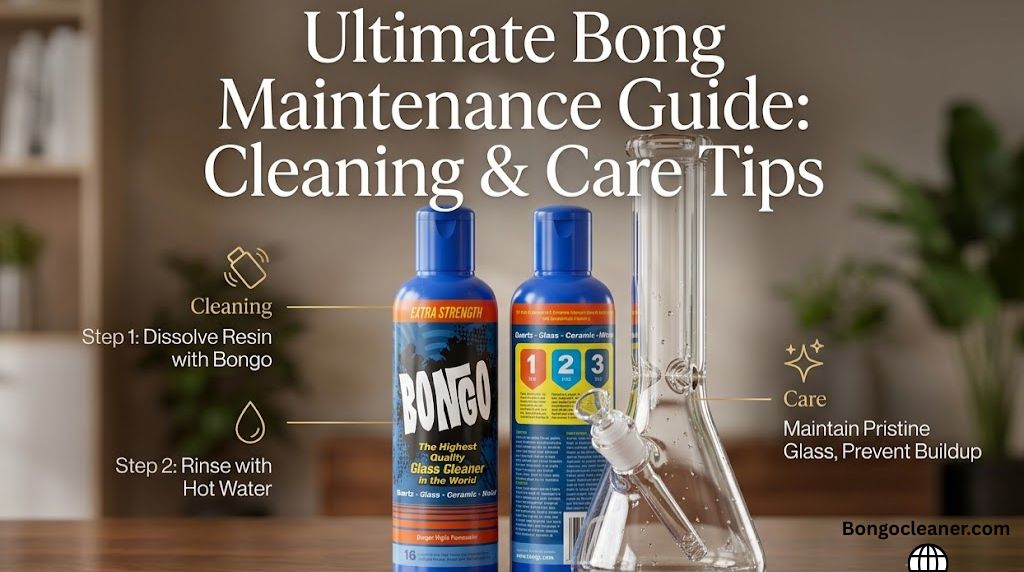
Bongo Glass Cleaner isn't just another liquid in a bottle. It is a high-performance breakthrough for your collection. We've engineered this formula for instant molecular disruption. It targets the specific lipid chains and carbon byproducts that make your glass look like a swamp. When you use a professional resin remover for glass, you stop guessing and start seeing results. It is the definitive answer to years of built-up grime. Our formula works at the speed of your lifestyle. It delivers immediate relief from the stickiest residue.
The Bongo promise is simple. You get crystal clear results without the "salt and shake" hassle. We've eliminated the need for abrasive scrubbing that risks your high-end borosilicate investment. Borosilicate is tough, but it isn't invincible. Micro-scratches from salt crystals can ruin the clarity of a piece over time. Our solution is powerful enough for the thickest, most neglected tar but gentle enough for your most delicate, hand-blown pieces. You'll spend less time hovering over a sink and more time enjoying the pure, clean taste of your favorite terpene profiles. Efficiency is our obsession. We demand high performance from every drop.
We operate on a direct-to-consumer model to ensure you get the most potent formula possible. There are no middle-men and no watered-down compromises. Every bottle of Bongo is a commitment to professional-grade maintenance. It is about restoring your items to their peak condition with zero manual labor. You've invested a lot in your glassware. It's time you used a cleaning solution that respects that investment. Stop fighting with your glass. Start restoring it.
Professional Results at Home
Bongo beats grocery store alternatives every single time. Most household cleaners are too weak to penetrate the hydrophobic barrier of resin. They leave a cloudy film and a chemical aftertaste. We offer a no-nonsense cleaning routine that restores your collection to showroom quality in minutes. It is about confidence. You'll know your piece is sterile, odor-free, and ready for peak performance. You don't need a degree in chemistry to get these results. You just need the right tool for the job. Our formula does the heavy lifting so you don't have to.
Ready for a Clearer Experience?
It's time to upgrade your kit. You've learned the science behind the gunk. You know why DIY methods fail and how heat bakes resin into the pores of your glass. Switching to a professional resin remover for glass means zero effort, zero odors, and total glass protection. Don't settle for a sub-par experience when professional clarity is just one bottle away. Your glass deserves a level of renewal that only a specialized formula can provide. Experience the transformation for yourself today. Get the Bongo Glass Cleaner now!
Experience Factory-Room Clarity Today
You've seen the science. Resin isn't just a surface stain. It's a complex, hydrophobic bond that requires targeted chemical disruption. Stop wasting your time with primitive salt and alcohol hacks. These DIY methods often leave behind micro-scratches and a foul, lingering stench. You deserve a solution that works as hard as you do. Your high-end borosilicate demands a higher standard of care and precision.
Using a professional resin remover for glass is the only way to achieve instant, showroom-quality results without the struggle. Bongo Glass Cleaner delivers bold, no-nonsense performance with an instant formula designed specifically for high-end glass accessories. It's fast. It's effective. It's the ultimate upgrade for your maintenance routine. Stop fighting physics and start enjoying your collection again. Experience the relief of a piece that looks, smells, and performs like new.
Stop scrubbing and start dissolving; Shop Bongo Glass Cleaner!
Your glass is an investment. Keep it pristine and enjoy every session with total confidence. You've got the knowledge now. It's time to get the results you deserve.
Frequently Asked Questions
What is the best resin remover for glass pipes?
Bongo Glass Cleaner is the definitive choice for professional restoration. It features a specialized formula that targets resin at the molecular level. This ensures a factory-room finish in minutes without the need for abrasive scrubbing. It outperforms standard DIY methods by dissolving tar instantly. You get a pristine piece with zero effort and maximum clarity.
Is it safe to use chemical resin removers on borosilicate glass?
Yes, professional formulas are specifically engineered to be safe for high-end borosilicate glass. Borosilicate is highly resistant to thermal shock and chemical corrosion. A quality resin remover for glass won't etch or weaken the material. In fact, it protects the glass by removing abrasive carbon buildup that can cause stress points. Always follow the manufacturer's instructions for the best results.
Can I use vinegar and baking soda to remove resin?
Vinegar and baking soda are ineffective for deep resin removal. While they cause a fun fizzing reaction, they lack the chemical power to dissolve hydrophobic tars and lipids. You'll likely end up with a sticky mess and a piece that still smells like old ash. Professional solvents are required to break the molecular bonds of resin. Don't settle for kitchen experiments when you need real clarity.
How long should I soak my glass in resin remover?
Most professional cleaners work in under five minutes with a quick shake. For heavily neglected pieces with years of buildup, a longer soak of 30 to 60 minutes might be necessary. Some users prefer a 24-hour soak for complex percolators where agitation is impossible. Check your specific formula's instructions. Bongo Glass Cleaner is designed for instant results, saving you hours of waiting.
Does resin remover leave a smell or taste behind?
High-quality resin removers are designed to rinse away completely with hot water. They leave no chemical residue, smell, or taste behind. The goal is to restore the "new glass" scent by encapsulating and removing odor-causing volatile organic compounds. If you notice a lingering taste, you simply need to rinse the piece more thoroughly. A clean piece should have zero flavor interference.
Will resin remover work on ceramic or metal pieces too?
Most resin removers are compatible with ceramic and metal, but you should always verify the label first. Ceramic is generally porous, so it may require extra rinsing to ensure no solution remains trapped. Metal pieces are usually durable enough for these solvents. Avoid using these cleaners on plastic or acrylic, as the chemicals can cause clouding or structural damage. Stick to glass, ceramic, and metal for the best performance.
How do I get the resin smell out of my glass?
The only way to eliminate the smell is to remove every microscopic trace of resin. Professional formulas don't just mask the odor; they encapsulate and wash away the molecules responsible for the stench. A thorough cleaning with a dedicated resin remover for glass followed by a hot water rinse will leave your piece smelling like the day you bought it. Deep chemical cleaning is the only permanent solution.
Can I reuse my resin cleaning solution?
You can reuse some solutions until they become too dark and saturated to be effective. However, the cleaning power diminishes with every use as the solvent becomes clogged with dissolved tar. For the most efficient results and the highest level of clarity, fresh solution is always recommended. If you're cleaning multiple small pieces at once, a single batch of cleaner is usually sufficient to get the job done.