Cart
0
Why are you still risking your expensive borosilicate glass by shaking it like a cocktail shaker just to move a little bit of stubborn tar? It's a dangerous game that usually ends in a sink full of broken shards. Most people think cleaning requires brute force. The truth is much simpler. Heavy duty cleaning isn't about force; it's about using a professional heavy duty glass pipe cleaner with molecular solvents that outmatch resin's chemical bond.
We know the frustration. You've tried the salt and alcohol. You've soaked it overnight. Yet, those lingering odors and black streaks remain. It feels like a losing battle. This guide changes that. Discover how professional-grade formulas like Bongo Glass Cleaner or our high-performance Bong Cleaner obliterate stubborn resin and tar instantly. We're here to restore your glass to factory-fresh clarity while eliminating every trace of odor and grime.
In this definitive guide, we'll preview the most effective restoration techniques available right now in July 2026. You'll learn how to choose the right specialized formulas for your specific setup and how to implement a maintenance-free cleaning process. Stop scrubbing and start enjoying the crystal-clear results you deserve.
Key Takeaways
- Understand how repeated heat "bakes" resin onto glass and why standard scrubbing can't break that stubborn chemical bond.
- Discover why a professional heavy duty glass pipe cleaner uses specialized surfactants to lift tar that 99% isopropyl alcohol leaves behind.
- Learn the "Active Soak" protocol to safely restore high-end borosilicate to its original, factory-fresh clarity without the risk of breaking it.
- Identify the key active ingredients that signal a true industrial-strength formula for instant, maintenance-free results.
- See why Bongo Glass Cleaner is the definitive choice for obliterating stubborn odors and restoring total transparency to your collection.
The Resin Wall: Why Standard Cleaning Methods Fail
Resin isn't just a surface stain. It's a complex, chemical nightmare. Every time you use your glass, you're creating a cocktail of carbonized plant matter, ash, and sticky oils. These elements fuse together to form a hydrophobic barrier. This means water simply slides off. Standard dish soaps and weak household cleaners don't have the solvency to penetrate this layer. They lack the chemical "teeth" needed to bite into the gunk and pull it away from the silica surface of your glass.
The problem gets worse with every use. Heat acts as a catalyst, essentially kiln-firing the residue onto your piece. The resin polymerizes, turning from a sticky liquid into a rock-solid, plastic-like coating. This "baked-on" effect is why standard soaking often fails. While industrial laboratories might use something as aggressive as a Piranha solution to strip organic matter from glass, you need a solution that is safe for your home but just as relentless on carbon. A professional heavy duty glass pipe cleaner is the only way to break these stubborn molecular bonds without hours of useless scrubbing.
To better understand why these deposits are so difficult to remove, watch this helpful video:
Signs Your Glass Needs a Heavy Duty Solution
Don't wait until your piece is completely opaque to take action. Visual cues like deep black buildup or a permanent "cloudy" film are clear warnings. This cloudiness is often a thin layer of resin that has bonded so tightly it resists standard rinsing. You'll also notice a massive performance drop. Restricted airflow makes every hit a struggle, and the flavor profile becomes metallic or burnt. When the stale, swampy odor takes over, a dedicated bong smell remover is often the only cure to save your investment and your senses.
The Risks of Using Incorrect Cleaning Tools
Desperation leads to bad decisions. Many enthusiasts reach for abrasive brushes or metal pokers, but these are glass killers. They create micro-scratches on the surface. These tiny grooves act as anchors, giving new resin a place to grip even harder next time. Avoid industrial degreasers too. They aren't designed for smoking accessories and can leave toxic residues behind. Most importantly, stop the "death shake." Shaking heavy glass pieces with wet, slippery hands is the number one cause of fractures. Using a high-quality heavy duty glass pipe cleaner removes the need for physical force, keeping your delicate percolators and thick bases safe.
Professional Formulas vs. DIY: The Heavy Duty Difference
Most enthusiasts start their journey with a bottle of 91 percent isopropyl alcohol and a box of coarse salt. It's the "old school" method passed down through generations. While this might move some surface grime, it's a primitive approach to a complex chemical problem. A professional heavy duty glass pipe cleaner operates on an entirely different level. Instead of relying on physical abrasion to scrape resin away, these formulas use advanced molecular science to dissolve the bond between the glass and the tar.
The secret lies in understanding how cleaning solvents work to tackle non-polar substances. Resin is an oily, organic compound. Isopropyl alcohol is a polar solvent, which means it has limited effectiveness against the thick, "baked-on" oils found in neglected pipes. Professional-grade cleaners incorporate surfactants. These specialized molecules lower the surface tension of the liquid, allowing it to slip underneath the resin layer and lift it whole. This process is far more efficient than the "shaking and praying" method used with DIY mixtures.
Don't confuse "heavy duty" with "toxic" or "corrosive." Modern restoration science has moved past the need for harsh acids. Today's best formulas are engineered to be relentless on carbon while remaining safe for high-end borosilicate. This leads to the ultimate debate in glass maintenance: the soak versus the shake. Shaking with salt is a physical assault on your glass that can cause internal stress or fractures. Soaking with a high-performance solvent is a passive, chemical process that protects your investment while delivering a deeper clean.
Why Isopropyl Alcohol and Salt Fall Short
Alcohol evaporates quickly, often leaving a sticky, thin film behind rather than a truly clean surface. Salt is an even bigger problem. While it acts as an abrasive, it can't navigate the complex geometry of modern glass. If you have a honeycomb or tree percolator, salt grains often get trapped in the tiny slits, causing clogs that are nearly impossible to remove. DIY methods require excessive physical labor that often results in "good enough" rather than "factory fresh" clarity.
The Power of Specialized Resin Solvents
When you switch to a dedicated resin remover for glass, you're choosing a liquid-only solution. This is critical for intricate pieces. A liquid solvent reaches every hidden corner and internal chamber that a brush or salt grain could never touch. It strips away the amber tint and the "cloudy" look, restoring the original refractive index of the glass. You aren't just cleaning the piece; you're performing a total restoration. After seeing how easily a pro formula handles the toughest grime, you'll realize that Bongo Glass Cleaner is the only logical choice for a serious collector.
Selecting the Best Heavy Duty Glass Pipe Cleaner
Stop guessing at the smoke shop. You need a formula that works as hard as you do. A true heavy duty glass pipe cleaner isn't just about a flashy label; it's about the specific chemistry inside the bottle. Most generic options are just watered-down versions of what you actually need. When you're dealing with months of neglected resin, you need high-performance surfactants and professional-grade solvents that target carbonized buildup on contact.
Material compatibility is non-negotiable. Your high-end borosilicate glass deserves respect. Cheap, acidic cleaners can actually "etch" the surface over time, making it look dull and permanent cloudy. We focus on formulas that are relentless on grime but gentle on the silica structure. You also need to consider the "reusable" factor. Some professional liquids can be filtered and used multiple times, providing much better value than one-time-use solutions that lose their potency after a single soak. Finally, ensure your choice deodorizes. Breaking down the resin is only half the battle. A professional formula must neutralize odors at the molecular level, leaving your piece smelling like absolutely nothing.
Ingredient Transparency and Safety Standards
Transparency is your best friend when selecting a glass pipe cleaning liquid. Avoid products that hide behind vague "proprietary" labels without mentioning safety standards. You want a formula that rinses away completely and leaves zero chemical film. This is vital for your safety and the flavor of your hits. Steer clear of artificial dyes or harsh perfumes. These additives don't help the cleaning process; they just make the product harder to rinse out of tight corners.
Compatibility with Intricate Glass Designs
Modern glass is complex. If you have multi-arm percolators or honeycomb discs, you can't rely on brushes. Heavy-duty liquids are superior because they reach every internal chamber through simple immersion. The viscosity of the cleaner plays a huge role here. It needs to be thin enough to flow through tiny percolator slits but have enough "cling" to coat the vertical walls of the main chamber. This ensures total coverage. A high-quality heavy duty glass pipe cleaner will also protect your investment by being safe for external logos and kiln-fired decals, ensuring your piece looks as good as it performs.

Restoration Protocol: Deep Cleaning Stubborn Pieces
Restoring a neglected piece isn't a race. It's a strategic operation. You've already learned why standard methods fail; now it's time to deploy the solution. A high-performance heavy duty glass pipe cleaner works through chemical saturation, not physical force. This protocol ensures that even the most "baked-on" carbon layers are stripped away without risking a single fracture. We focus on the "Active Soak" method, which allows the formula to penetrate the microscopic pores of the glass where resin takes root.
Temperature plays a massive role in speed. While our formulas work at room temperature, using warm water to pre-rinse your piece can accelerate the molecular breakdown. Heat expands the resin slightly, making it more porous and easier for the solvent to attack. For light weekly maintenance, a 15-minute soak is usually plenty. For pieces with heavy, opaque buildup, plan for a 60-minute session. If you are dealing with extreme, year-old neglect, let the chemistry work its magic overnight. The goal is total restoration, not just a surface wash.
The Soak-and-Wash Method for Industrial Buildup
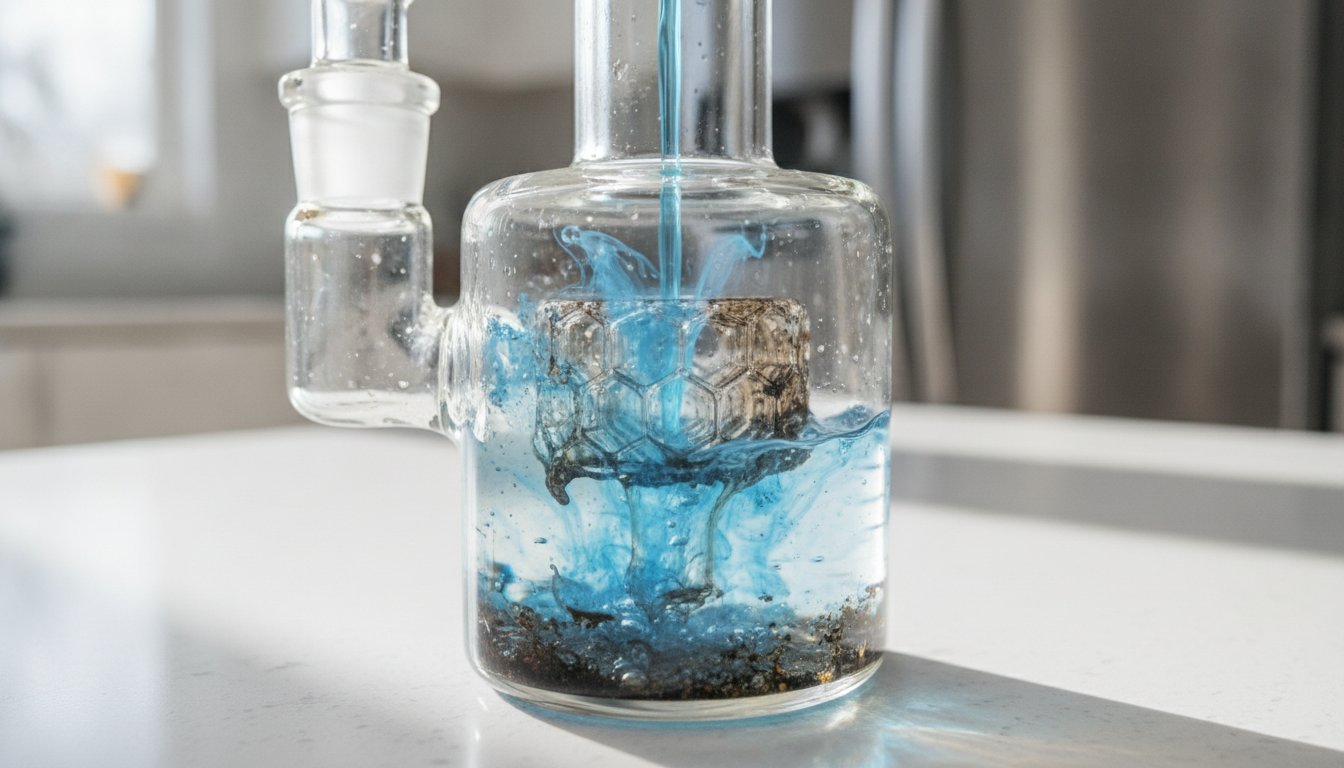
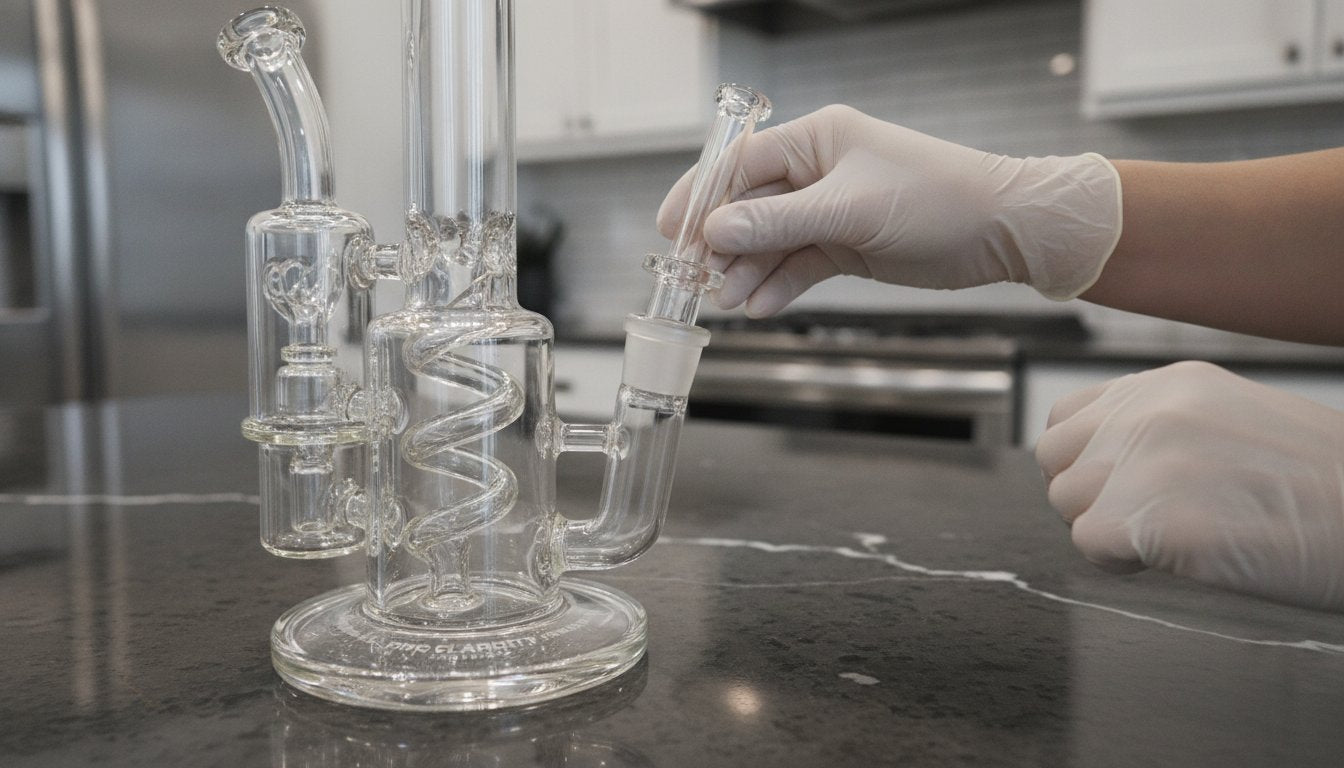
Preparation is the first step toward a factory-fresh finish. Start by sealing all openings. Use dedicated cleaning caps or plugs to ensure the liquid stays exactly where it's needed. Once sealed, fill the piece entirely with your heavy duty glass pipe cleaner. You want zero air gaps. Submerging smaller parts like bowls and downstems in a separate container ensures every millimeter of surface area is covered. Let the piece sit undisturbed. This "wait time" is when the surfactants do the heavy lifting, detaching the tar from the borosilicate wall. Ready to see the transformation? Grab your bottle of Bongo Glass Cleaner and start the restoration today.
Cleaning Percolators and Downstems with Precision
Intricate designs like honeycomb or tree percolators require a specific technique. Air bubbles are your enemy. They create dry spots where the cleaner can't reach the resin. Use the "tilt and rotate" method. Gently turn the piece in all directions after filling it to displace trapped air. This ensures the solution flows into every tiny slit and internal chamber. Once the solution turns dark and the glass beneath looks transparent, the resin has successfully transitioned from a solid bond to a liquid suspension. Finish with a high-pressure hot water rinse followed by a room-temperature rinse to prevent thermal shock. This two-stage rinse ensures a crystal-clear, streak-free shine every time.
Bongo Glass Cleaner: Industrial Strength for Daily Performance
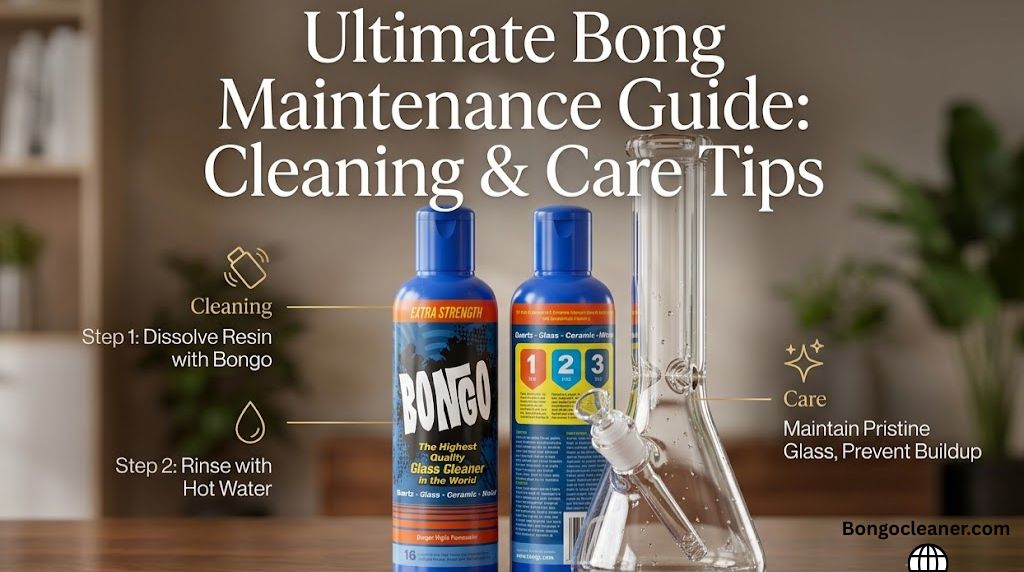
Stop settling for "clean enough." Your collection deserves professional-grade maintenance that actually delivers on its promises. Bongo Glass Cleaner is the definitive heavy duty glass pipe cleaner for serious enthusiasts who demand perfection. We've stripped away the complexity of traditional cleaning to provide a no-nonsense solution. It's built for those who value their time and their glass. Our formula doesn't just wash the surface; it performs a total resin restoration. You get instant relief from the grime that other cleaners leave behind.
The secret is our proprietary formula. It targets resin and tar at the molecular level, breaking the chemical bonds that make buildup so stubborn. This isn't a watered-down household solvent. It's industrial-strength power refined for the most delicate borosilicate. You'll see professional clarity return to your piece in minutes. This immediate transformation does more than just look good. It restores the original airflow and flavor profiles of your glass. A clean piece means a better overall experience. You'll taste the difference immediately after the first rinse.
The Bongo Advantage: Why Our Formula Wins
Efficiency is our obsession. We engineered Bongo Glass Cleaner to save you from the endless scrubbing cycles of DIY methods. It saves time by liquefying carbonized waste on contact. If you've been struggling with how to clean a glass pipe effectively, this is your definitive answer. Our formula also features superior deodorization. It doesn't just hide odors under artificial perfumes. It obliterates the "old bong" smell permanently. You're left with a neutral, fresh piece that's ready for immediate use. It's the professional choice for daily performance.
Commitment to Glass Longevity
Your glass is a significant investment. Harsh, generic cleaners can often be too acidic, which risks etching the surface over time. Our heavy duty glass pipe cleaner is specifically balanced to preserve the structural integrity of your collection. It's relentless on resin but safe for your most intricate percolators and custom designs. We've streamlined the entire maintenance process through our national e-commerce platform. Getting the world's best cleaner delivered to your door is now effortless. Don't let your glass stay cloudy or restricted for another day. Experience the transformative power of a true industrial-strength restoration. Shop Bongo Glass Cleaner for Heavy Duty Results and see the clarity for yourself.
Take Control of Your Glass Restoration
Stop fighting a losing battle against baked-on carbon and stagnant odors. You've seen why DIY methods fail to penetrate the molecular bond of stubborn tar. Standard scrubbing only risks your expensive glass. True restoration requires a chemical solution that works as hard as you do. By switching to a professional heavy duty glass pipe cleaner, you eliminate the need for force and guarantee a pristine finish every single time.
Our proprietary Bongo Glass Cleaner formula is fast-acting and engineered specifically for heavy resin and tar removal. It's completely safe for all glass smoking accessories, including your most intricate percolators. You'll experience immediate relief from the grime that's been holding your collection back. Don't settle for cloudy chambers or restricted airflow when professional clarity is just one soak away. It's time to stop the death shake and start using a formula that delivers on its promises.
Restore your glass to factory-fresh clarity with Bongo Glass Cleaner today!
Your collection is an investment that deserves the best care possible. Step up to industrial-strength performance and get back to the smooth, flavorful hits you've been missing. You've done the research; now get the results.
Frequently Asked Questions
What makes a glass cleaner 'heavy duty' compared to standard options?
A heavy duty glass pipe cleaner utilizes advanced surfactants and molecular solvents specifically engineered to break the chemical bond of polymerized resin. Standard options like dish soap or weak isopropyl alcohol simply lack the solvency to penetrate baked-on tar. These professional formulas act as a liquid restoration tool, liquefying organic buildup on contact rather than relying on physical scrubbing.
How long should I soak a pipe with heavy resin buildup?
Soak times vary based on the level of accumulation. For light weekly maintenance, a quick 15 minute soak is often sufficient to restore clarity. If you're dealing with thick, opaque black resin, extend the soak to 60 minutes. For extreme cases involving year-old neglect, let the piece sit submerged overnight. The formula works passively, so the longer it sits, the less work you do later.
Is it safe to use heavy duty cleaners on expensive borosilicate glass?
Yes, professional-grade heavy duty cleaners are specifically balanced to be safe for high-end borosilicate glass. They are actually safer than DIY methods because they eliminate the need for the dangerous "death shake" or abrasive brushes. By using a chemical soak, you protect the structural integrity of complex percolators and delicate joints. These formulas maintain the refractive index of your glass without leaving a film.
Can a heavy duty cleaner remove the smell of burnt resin completely?
Absolute odor elimination is a hallmark of industrial-strength cleaners. Standard rinses often leave behind a swampy, metallic scent because they don't fully dissolve the microscopic tar deposits inside the glass pores. A heavy duty glass pipe cleaner neutralizes these odor-causing molecules at the source. Once the resin is liquefied and rinsed away, your piece will return to a completely neutral, scent-free state.
Do I need to use salt or abrasives with a professional heavy duty cleaner?
No, you don't need salt or abrasives when using a high-performance liquid solvent. Salt can be dangerous for modern glass because grains often get trapped in honeycomb or tree percolators, causing permanent clogs. Professional formulas rely on chemistry rather than friction. This liquid-only approach ensures that every internal chamber and tiny slit is reached without the risk of micro-scratches or blockages.
Can I reuse heavy duty glass cleaning solutions to save money?
Many professional restoration liquids are designed for multiple uses. You can often filter the solution through a fine mesh or coffee filter to remove large particulates and return the liquid to its bottle. While the formula will eventually lose potency as it becomes saturated with resin, you can typically get several deep cleans out of a single bottle. This makes professional formulas a much better long-term value.
Will a heavy duty cleaner damage the labels or decals on my glass?
Quality formulas are safe for kiln-fired labels and high-end decals. Because the cleaner is engineered to target organic resin and tar, it typically won't interact with the inorganic materials used in glass branding. Avoid using heavy duty cleaners on cheap, aftermarket stickers or hand-painted designs that aren't kiln-cured. For high-end borosilicate brands, the cleaner preserves the exterior look while perfecting the interior clarity.
How often should I use a heavy duty cleaner versus a daily maintenance rinse?
Use a heavy duty cleaner for deep restoration every 7 to 14 days depending on your usage frequency. Daily maintenance should consist of simple warm water rinses to prevent fresh ash from settling. When you notice restricted airflow or any discoloration, it's time for a professional Bong Cleaner soak. Consistent deep cleaning with Bongo Glass Cleaner prevents resin from baking onto the glass, making every future session faster.